Why Some TikToks Blow Up – and Yours Don’t
Common creator mistakes and what they reveal about social media strategy.
By Elizabeth Ndudi
Elizabeth Ndudi is a marketing student interested in content creation and social media marketing.She enjoys exploring how platforms like TikTok shape online trends and creator growth.
Why TikTok Growth Is Not as Random as It Looks
When you open the TikTok app on your phone and scroll, it seems as if every video you see is going viral. A random dancing video blows up, which makes content creation look easy. A short few second video and suddenly the person who made it hits 100,000 followers. From the outside, it feels like luck, but social media rewards people who understand the system.
This is what Professor Wolters explains well in “Stop Doing This on TikTok: Common Creator Mistakes.” People on TikTok don’t fail because they lack creativity or can’t begin trends, they “fail” because they don’t know how TikTok works. People tend to underestimate social media strategy, especially while using TikTok. They think all it takes is just one video, but don’t realize that for TikTok it’s all just business.
The key idea to remember in this video is that each common mistake creators make usually goes back to that one thing. TikTok rewards strategy, not randomness.
If you are someone who’s trying to start a side hustle, grow your personal brand, or want to just dabble into content creating, watching this short video and understanding these key mistakes will give you a head start in your journey to beginning social media.
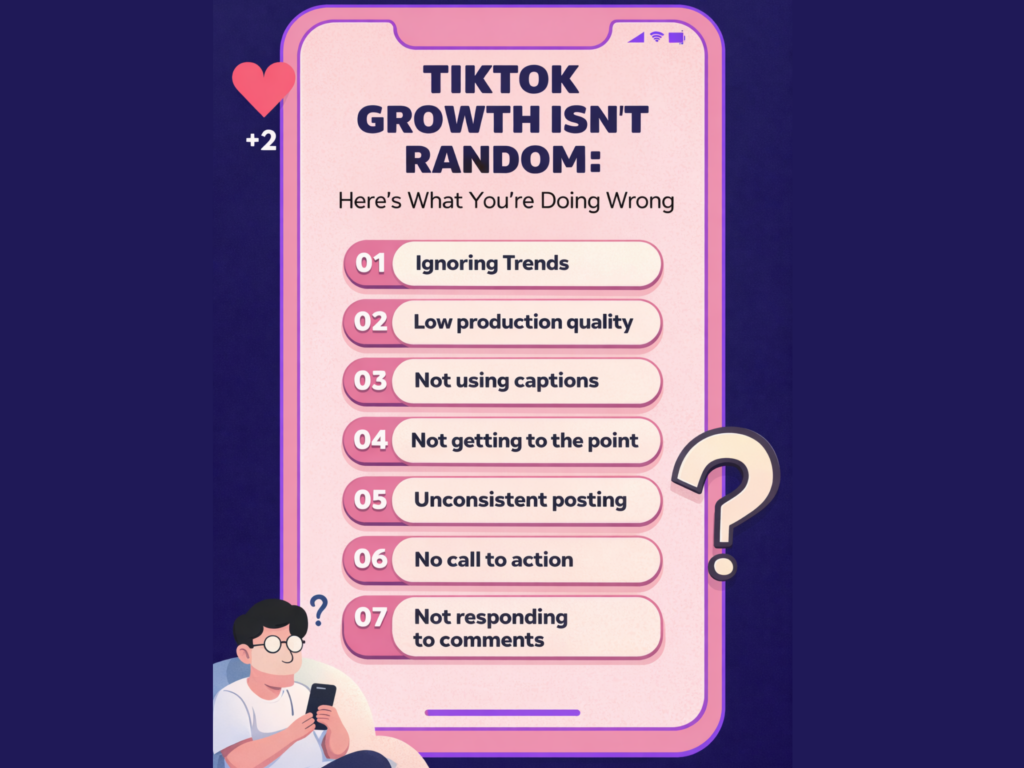
Mistake 1: Ignoring Trends because it’s not ‘you’
One of the first mistakes Professor Wolters mentions is that creators believe they will be the ones to start the next big trend.
Trends can be more helpful than you think. Of course it’s exciting to think you can blow up by starting a new trend. And although it can happen, it’s pretty rare.
TikTok thrives on trends. That doesn’t just mean the video you see that is currently trending but also trending sounds, trending hashtags, and trending formats. The algorithm pushes what is already doing well. If you ignore trends completely, you are making growth harder than it needs to be.
This doesn’t mean that you have to copy the trends exactly. If dancing or making funny content isn’t your thing, you don’t have to do that. You can use the trending audio or format and spin it your way. Make it fit your niche. The goal is to participate in the trend, not necessarily copy it word for word.
This applies beyond TikTok. You can even think of this from a professional standpoint. In an early growth stage you don’t ignore market trends and hope customers will just come to you. Creators don’t just chase trends, they adapt to their brand.
Mistake 2: Low Production Quality
Another major mistake is poor lighting and bad audio.
As simple as it sounds, it can make quite an impactful difference. TikTok is an app where constant entertainment is effortless, so if your audio is slightly crackly or the video is too bright to see your face, your audience will simply scroll to the next and not struggle to understand your video. The reward is going to go to the person who has a clearer polished video.
However, this is a pretty easy fix. There are some key things you can do to instantly make your picture and sound quality much better. This is what Professor Wolters kindly lists out for us in his video:
• Face the light, do not stand with the sun behind you
• Film in a quieter environment
• Use a microphone if possible
• Check your audio before posting
Overall, production quality doesn’t just improve your video but it also strengthens your credibility. Low production quality can instantly make your video seem less professional and less trustworthy, even if your points are strong. Viewers notice the effort you put into your content, and they factor in quality when they take into account what you’re saying.
Mistake 3: Not Using Captions
One point that stood out to me was when Professor Wolters talked about captions.
Ignoring captions means you’re ignoring a part of your audience. Nowadays many people scroll in silence. People scroll during class, at work, in public. All without audio. So relying on audio for a successful video sometimes isn’t the way to go, especially if you’re trying to get a point across or talk.
He also mentions that TikTok generates captions, however you should keep an eye out for any mistakes they may make as they often generate captions phonetically.
The key thing to remember is that if someone can read along while listening, they are more likely to stay engaged. Thus, by using captions you can increase accessibility, increase retention, and lastly increase comprehension. This ties into a bigger idea, which is properly understanding how your audience actually consumes content. You can’t just assume they experience it the same way you do.
Applying this to the business world:
We can connect it to a bigger business principle that you have to understand how your audience actually behaves, not how you assume they behave. It’s easy to assume everyone watches videos with sound on, just like it’s easy for businesses to assume customers interact with their product a certain way. But this isn’t always the case. The most successful companies don’t assume, they research, look at data, and pay attention to patterns.
Mistake 4: Not Getting to the Point Fast Enough
This may be one of the most important lessons in the entire video.
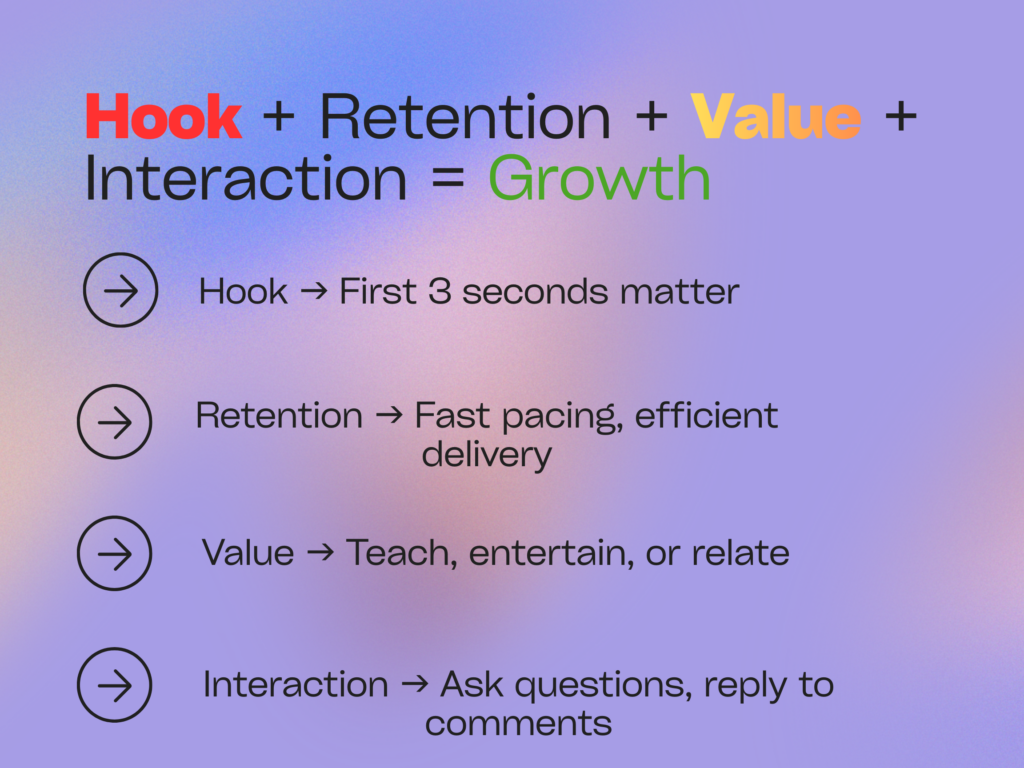
Like mentioned before, TikTok is an app where constant entertainment and dopamine hits are effortless. Bored of one TikTok? Scroll to the next one. TikTok attention spans are short. Professor Wolters compares it to a goldfish level of attention. This means that if you do not hook someone in the first 3 to 5 seconds, they will scroll to the next.
Meaning cut the long introductions, the title sequences, and stop with the unnecessary buildup. Get to the point quickly. This could also be a short preview of the most dramatic moment in the beginning and then rewinding and explaining, which shows the audience what they want to see but not spoiling it all. Hook them.
Hooks aren’t just for TikTok. The points made apply to a lot more situations than just social media.
Whether it’s presentations, interviews, resumes, LinkedIn posts, or elevator pitches, in all of these you don’t get much time to make someone care about what you’re saying. If you aren’t clear or start to ramble, people mentally check out. It doesn’t matter how good your idea is going to be if no one stays long enough to hear it. Especially for younger individuals, whether it’s students or professionals, being able to get to the point and start strong is a good advantage that can make you stand out.
Mistake 5: Posting Infrequently
TikTok really does reward consistency and volume. One thing Professor Wolters points out is that if you post randomly, the algorithm can’t really “trust” you.
If you upload one video in one month, disappear in the next and then post a bunch in another, and then go silent again, TikTok doesn’t know what to expect from you. And if the algorithm doesn’t know what to expect, it’s less likely to push your content out over consistent creators.
Consistency builds a few important things. It builds algorithm trust, because you’re showing up regularly. It builds audience expectation, because people start to know when to look for your content. And it helps build momentum, which is a key part of a platform that changes as much as TikTok.
However, that doesn’t mean you need to post every single day in a row, or ten times a day. Creating a simple content schedule can make a big difference. This can just be a straightforward plan where you schedule when and what you post to ensure you’re staying consistent. You can film a bunch of videos ahead of time and then post them when planned, which both removes the pressure of posting and keeps you organized. It could be three times a week instead of every day, but the key idea is that it’s predictable. When you stay consistent with timing, it looks more intentional and professional, and that consistency will build up over time.
Strategy Over Motivation
This is where a lot of college creators struggle. They rely on motivation and post only when they feel inspired. But growth won’t come from random bursts of bursts of creativity and motivation. Growth and success will start to show with systems.
This applies to business too. Companies don’t operate based on motivation. They use strategy, structure, and planning. If you treat content creation like a hobby, you’ll get lower results, which is fine if that’s what you’re going for. But if you treat it like a business, you’ll see more consistent growth.
Mistake 6: No Call to Action
Another mistake is not telling your audience what to do next. Engagement matters especially on platforms like TikTok, which has become all about socializing and sharing.
• Likes
• Comments
• Shares
• Follows
Professor Wolters gives an example of asking viewers to comment with questions. That simple action increases interaction. More engagement tells TikTok that people value your content, which then increases reach.
A call to action doesn’t have to be pushy, like telling people to follow in the first three seconds. It can be simple. Asking a question, inviting discussion, or encouraging people to save the video makes it feel more natural. When you do that, you’re not just asking for engagement. You’re giving people a way to be part of the content. It makes them more invested and more likely to come back for similar videos or topics they actually want to see.
Engagement Is Community
In order to actually grow long term, you shouldn’t focus solely on racking up views. You want to build a community which can’t happen without interaction. But this idea applies to business too. Brands that only care about numbers and sales usually don’t build real loyalty. The ones that last are the ones that listen, respond, and make customers feel involved.
Mistake 7: Not Responding to Comments
This one is often overlooked but can be one of the most effective. The idea is that you’re building a small community, not just trying to hit views for attention. Attention won’t last, community will.
If someone comments on your video, respond. Even better, create new videos responding to questions.
This is doing three things:
• It rewards your audience
• It encourages more comments
• It creates new content ideas
Mr. Wolters also points out that it increases watch time and platform engagement, which is a part of what will go into your page’s growth and eventually success.
TikTok wants people to stay on the app longer. So if your comments turn into actual conversations, that’s something the algorithm will pick up on.
Community is a competitive advantage.
In business, it’s the same idea. Customers are more likely to stick with a brand when they feel acknowledged, not just sold to. When a company responds, listens, and actually interacts, it builds loyalty which keeps people coming back.
In the same way that people follow creators who give them a great experience, when every brand is basically selling the same thing, what really makes someone choose you is how you make them feel. They’re buying into the experience and the relationship behind it.
TikTok as a Business Tool
What I appreciated most about this video is that it makes it clear TikTok isn’t just random entertainment. There’s an actual strategy behind it.
Every mistake Professor Wolters talked about essentially comes back to one thing which is understanding how the platform works and how it makes money. TikTok pushes content that increases engagement, retention, and trends because all of that keeps people on the app longer and eventually drives ad revenue. Once you understand this, you start thinking more strategically. If you understand the platform’s incentives, you can align what you’re doing with them.
Why this can be helpful beyond social media
Even if you’re not looking to be an influencer, this can still apply. These are real business skills. Understanding how an audience thinks, how to present ideas in a way that grabs attention, how to get people to interact, and how to stay consistent with what you put out are all things that show up in the real world too.
Social media isn’t just people posting for fun anymore. For a lot of brands and businesses, it’s a huge part of how they connect with people. So learning how to use it strategically can give you an advantage, even outside of social media.
Final Takeaway
At the end of the day, TikTok growth isn’t always luck. It comes down to being intentional. It’s strategically participating in trends, showing up consistently, communicating clearly, and actually building a community instead of just chasing views. The creators who grow aren’t always the most talented, but they’re usually the most consistent and the most aware of what they’re doing.
Next
If you want to dive even further into content creation and learn more about growing your platform, these blogs and videos might be cool to check out!
23 expert TikTok tips for viral success in 2025
HOW TO BUILD YOUR PERSONAL BRAND even if you *think* your life is bori… | TikTok