What Is Affiliate Marketing and Who Are the Big Players?
By Mylin Castillo
Marketing student at the University of Illinois Urbana-Champaign interested in digital marketing, branding, and social media strategy.
Affiliate Marketing Explained: How Influencers and Brands Work Together
If you spend time watching YouTube videos, scrolling through TikTok, or reading blogs online, there’s a good chance you’ve already interacted with affiliate marketing without even realizing it. Maybe you’ve heard a creator say something like: “Check the link in my description if you want to try this.” Or maybe you’ve seen a discount code from an influencer offering 10% off a product.
These small details are actually part of a much larger marketing system called affiliate marketing, and it has become one of the biggest ways creators and influencers make money online today. At the same time, affiliate marketing has also become one of the most effective ways for companies to promote their products to new audiences. Instead of relying only on traditional advertisements, brands now work with creators who already have loyal followers.
This creates a marketing system where everyone can benefit. Creators earn commissions. Brands reach new audiences. Consumers discover products through people they trust.
But to really understand how affiliate marketing works, it helps to break down what it actually is and who the key players are behind the scenes.
What Is Affiliate Marketing?
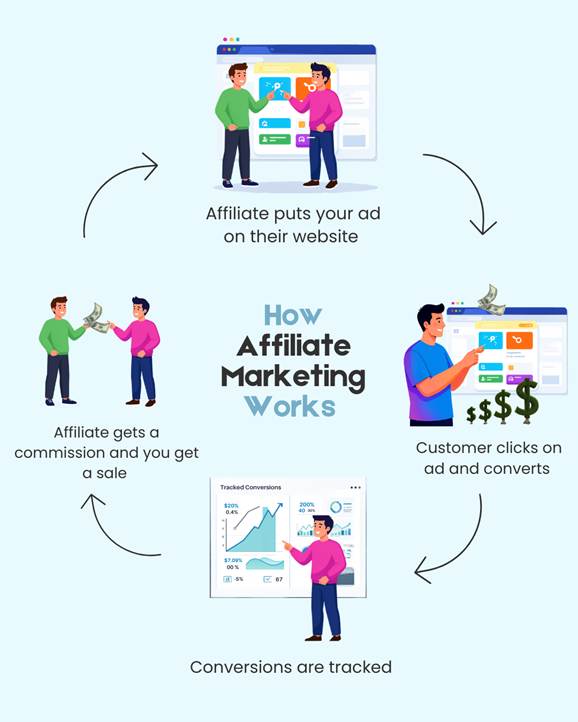
Affiliate marketing is a performance-based marketing strategy where a person promotes a company’s product or service and earns a commission when someone completes an action through their unique link.
That action might include:
- Buying a product
- Signing up for a subscription
- Booking a service
- Downloading an app
The important part is that the affiliate only gets paid when results happen. This is what makes affiliate marketing different from traditional advertising. With traditional ads, companies often pay upfront whether the advertisement leads to sales or not. With affiliate marketing, the company only pays when a purchase or action actually occurs.
Here is a simple example. Imagine a language learning company like SeatGeek gives a creator a special link such as: seatgeek.com/CreatorName
If someone clicks that link and buys the software, the creator earns a percentage of the sale. The company benefits because they gain a new customer. The creator benefits because they earn a commission. This system is possible because each affiliate receives a unique tracking link that allows the company to see exactly where the customer came from.
Real Life Example of Affiliate Marketing
Affiliate marketing appears in many different industries, but travel content is one of the easiest places to see it in action. Imagine you are watching a travel vlogger who is exploring the Bahamas. During the video, the creator might mention a tour they took while visiting the island.
They might say something like: “If you want to try this same tour, I’ll put the link in the description below.” That link is usually an affiliate link connected to a booking platform. If a viewer clicks the link and books the tour, the creator earns a small commission from the company running the tour.
For the travel company, this is great marketing because their tour is being promoted to an audience that already enjoys travel content.
For the creator, it provides a way to monetize their videos without needing to create their own product.
Why Affiliate Marketing Has Grown So Much
Affiliate marketing has become extremely popular over the past decade, especially with the rapid growth of social media and influencer culture. Platforms like Instagram, TikTok, YouTube, and blogs have made it easier than ever for creators to share products with their audiences.
At the same time, businesses are always looking for marketing strategies that are both effective and affordable. Affiliate marketing brings these two sides together by allowing companies to promote their products through creators who already have loyal followers online.
Another reason affiliate marketing has grown so quickly is because consumers today spend a large portion of their time online. Instead of relying only on traditional advertisements, people often look to creators, influencers, and online reviews before deciding to purchase something. As a result, brands have started partnering with affiliates who can introduce their products in a more natural and relatable way. According to Fifth & Cor, affiliate marketing has become a powerful strategy for brands because it combines performance-based marketing with trusted recommendations from creators who already have strong relationships with their audiences (Fifth & Cor, 2025).
Low Risk for Businesses
One of the biggest advantages for companies is that affiliate marketing reduces financial risk. Businesses do not have to spend large amounts of money upfront on advertising campaigns that may or may not work. Instead, they only pay affiliates when an actual result happens, such as a purchase, a lead, or a sign-up. This performance-based structure makes affiliate marketing a very efficient strategy for companies that want measurable results.
Affiliate marketing allows brands to work with many different creators at the same time. Instead of relying on one large campaign, businesses can have dozens or even hundreds of affiliates promoting their products across different platforms. This helps brands reach new audiences and expand their visibility online without dramatically increasing their marketing costs.
Monetization for Creators
Affiliate marketing is also appealing for influencers and content creators because it provides another way to earn income from their content. Instead of relying only on sponsorship deals or advertising revenue, creators can earn commissions whenever their audience purchases a product through their affiliate link.
For many creators, this allows them to turn their hobbies or passions into a source of income. For example, a fitness influencer might share workout gear, a beauty creator might recommend skincare products, or a travel blogger might promote hotels and travel tools. When their followers make purchases through these links, the creator earns a percentage of the sale. Many creators combine affiliate marketing with other revenue streams such as brand partnerships, ad revenue, and merchandise to build a more sustainable online career.
Authentic Recommendations
Another important reason affiliate marketing has grown so much is because it feels more authentic to consumers. People are often more likely to trust recommendations from creators they follow compared to traditional advertisements. When influencers share products, they genuinely use or enjoy, it feels more like a personal recommendation rather than a sales pitch.
This type of marketing can be especially powerful because creators have built relationships with their audiences over time. Their followers trust their opinions, which can make their product recommendations more influential. As a result, affiliate marketing allows brands to promote their products in a way that feels more relatable and trustworthy. According to Fifth & Cor, this trust-based relationship between creators and their audiences is one of the key reasons affiliate marketing has become such an important part of modern digital marketing strategies.
Overall, affiliate marketing continues to grow because it benefits both businesses and creators. Companies can promote their products in a cost-effective way, creators can earn income from their content, and consumers receive product recommendations from people they already trust. Because of these advantages, affiliate marketing has become a major part of the digital marketing industry and will likely continue expanding as social media and digital content keep evolving.
The Four Key Players in Affiliate Marketing
Even though affiliate marketing might look simple on the surface, several different participants work together to make the system function.
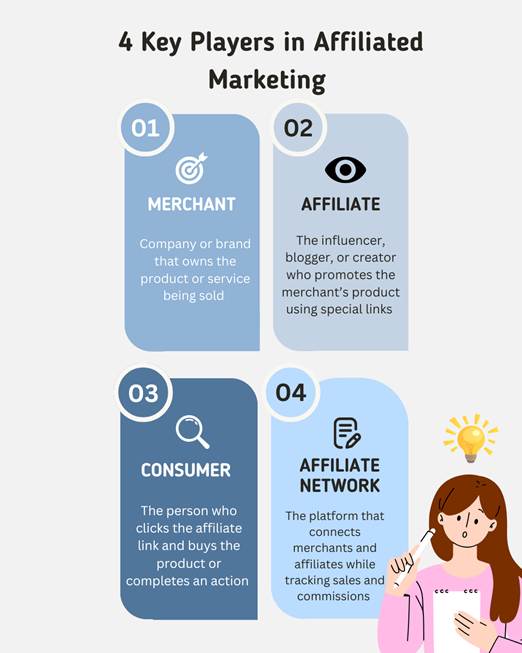
There are four main players involved:
- The Merchant
- The Affiliate
- The Consumer
- The Affiliate Network
Each role plays an important part in the affiliate marketing ecosystem.
The Merchant: The Company Selling the Product
The first player in affiliate marketing is the merchant. The merchant is the company or brand that owns the product or service being promoted. Merchants can be small businesses, startups, or large global corporations. Examples of merchants include:
- Travel companies offering tours
- Online retailers selling products
- Software companies selling subscriptions
- Streaming platforms offering memberships
Merchants create affiliate programs to encourage creators and publishers to promote their products. To make the program attractive, merchants offer commissions to affiliates who successfully generate sales or leads. These commissions can take several forms.
Percentage Based Commission
The affiliate receives a percentage of each sale. Example: 5% commission on a $200 purchase.
Fixed Payment Commission
The affiliate receives a set payment for each successful action. Example: $5 per booking or sale.
Lead Generation Commission
The affiliate earns money when someone signs up or registers for a service. Example: A payment when someone signs up for a free trial.
Merchants also provide affiliates with promotional tools such as:
- Affiliate tracking links
- Banner ads
- Marketing images
- Discount codes
These tools help affiliates promote products effectively. One major advantage for merchants is that affiliate marketing allows them to expand their reach without hiring a large sales team.
The Affiliate: The Creator Promoting the Product
The second key player is the affiliate, which is the individual or organization promoting the product. In today’s digital world, affiliates are often content creators who have built audiences online. Common types of affiliates include:
- YouTubers
- Bloggers
- TikTok creators
- Instagram influencers
- Website publishers
Affiliates promote products using their platforms and content. For example, a travel YouTuber might create a video about their trip to the Bahamas. During the video, they may recommend the hotel they stayed at or the tours they experienced. They then include affiliate links in the video description so viewers can book those same experiences. If someone books through that link, the affiliate earns a commission.
Successful affiliates usually focus on a specific niche, such as:
- Travel
- Technology
- Fitness
- Beauty
- Personal finance
By focusing on a niche, affiliates can build trust with their audience. When followers trust the creator’s recommendations, they are more likely to purchase through affiliate links.
The Consumer: The Person Taking Action
The third key participant in affiliate marketing is the consumer. The consumer is the person who clicks the affiliate link and completes the desired action. Consumers may discover affiliate links through:
- Blog posts
- YouTube videos
- TikTok content
- Social media recommendations
- Online product reviews
Many consumers are not even aware they are interacting with affiliate marketing. However, there are regulations in place to ensure transparency. In the United States, the Federal Trade Commission (FTC) requires influencers and creators to disclose affiliate relationships. This is why you often see disclaimers such as:
- “#ad”
- “#sponsored”
- “This video contains affiliate links.”
These disclosures are important because they help maintain trust between creators and their audiences.
Affiliate Networks: The Middleman Connecting Brands and Creators
The fourth player in affiliate marketing is the affiliate network. Affiliate networks act as intermediaries between merchants and affiliates. Instead of affiliates needing to partner directly with dozens of companies, they can join a network that connects them with multiple brands. Affiliate networks handle many technical tasks, including:
- Tracking affiliate links
- Recording sales data
- Managing commission payments
- Providing performance reports
This simplifies the process for both businesses and creators. For example, a travel creator may want to promote several travel companies. Instead of managing multiple separate affiliate programs, they can join a network that connects them to many travel brands at once.
Some well-known affiliate networks include:
- Travel Payouts
- CJ Affiliate
- Impact
- Rakuten Advertising
These platforms help match merchants with affiliates who can effectively promote their products.
Why Affiliate Marketing Is Important for Businesses
Affiliate marketing can be extremely valuable for businesses, especially smaller companies that may not have large marketing budgets. Instead of spending thousands of dollars on advertising campaigns, businesses can partner with affiliates who already have an audience. These affiliates might be bloggers, influencers, or content creators who share products with their followers using special tracking links. Because these creators have already built trust with their audience, their recommendations can feel more genuine than traditional advertisements.
For example, a small travel company may not have the budget for large advertising campaigns. However, by partnering with travel influencers, they can promote their tours to thousands or even millions of potential customers.
Affiliate marketing also allows businesses to scale their marketing efforts. A company could have hundreds of affiliates promoting their product at the same time. This level of exposure would be extremely difficult to achieve through traditional advertising alone.
Another major benefit is that affiliate marketing is performance-based, meaning businesses only pay when actual results occur, such as a sale or lead. This makes it a low-risk and cost-effective marketing strategy compared to traditional advertising where companies pay upfront regardless of results. Additionally, affiliate programs can increase website traffic, improve brand visibility, and help businesses reach niche audiences through affiliate networks and content creators who already have trusted relationships with their followers (Post Affiliate Pro).
Conclusion
Affiliate marketing has become one of the most important strategies in digital marketing today. It allows businesses to promote their products through trusted voices while only paying when real results occur. At the same time, it gives creators the opportunity to earn income by sharing products and services with their audiences.
The system works because four key players collaborate together:
- The merchant who owns the product
- The affiliate who promotes it
- The consumer who makes the purchase
- And the affiliate network that manages the process
As social media continues to grow and influencer marketing expands, affiliate marketing will likely remain a major part of the digital economy. For anyone interested in marketing, understanding how affiliate marketing works is an important step in understanding how modern businesses reach consumers online.
References:
Post Affiliate Pro. Benefits of Affiliate Marketing https://www.postaffiliatepro.com/academy/benefits-of-affiliate-marketing/
Fifth & Cor. The Affiliate Marketing Boom: Why It’s Redefining Brand Growth. 25 November 2025 https://www.fifthandcor.com/post/the-affiliate-marketing-boom-why-it-s-redefining-brand-s-growth