Your website can build trust — or destroy it in seconds
This is a business blog written by Ella Cady, marketing major in Gies University of Illinois. In the YouTube video “How Websites Piss Off Your Clients & Destroy Goodwill” by marketing professor Mark Wolters, viewers are told about how your website can either build trust or quietly destroy it. His message is direct with how websites make clients mad and destroy goodwill, most businesses don’t lose customers because of one massive mistake. Instead, they lose them through small website frustrations that slowly chip away at goodwill.
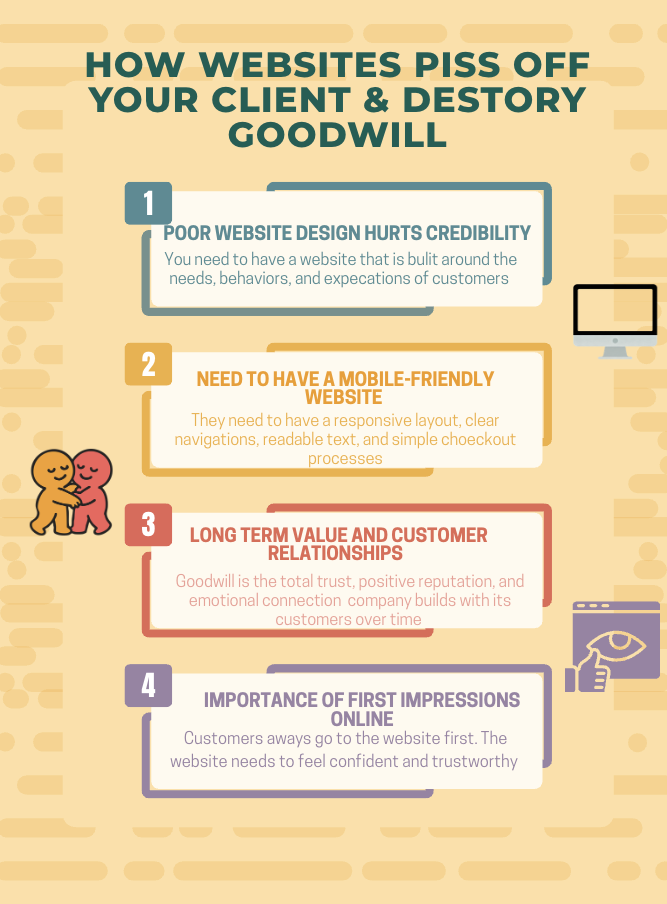
In today’s world where most customer interactions begin online, your website is often your first “handshake”. The handshake means it’s the first interaction that sets up the meeting. Before anyone speaks to a sales representative, visits a store, or calls customer service, they experience your brand through a screen. Customers always go to the website first. That digital experience sets the tone for everything that follows. The website needs to feel confident and trustworthy. If it feels messy, outdated, or confusing, doubt immediately creeps in, and therefore customers might not want to buy from your website.
And as Professor Wolters explains, even the small mistakes on your website can make people trust you less without even noticing. Often, the tiny frustrations build over time and will just end up leaving and choose another competitor. Over time, those small frustrations add up, and goodwill slowly disappears.
In this blog it will break down the core lessons from the video, explain why they matter from a marketing perspective, and explore how businesses can avoid sabotaging their own reputation online.
Before we jump right into the topics, we need to understand what goodwill means. In business goodwill means having a positive reputation and trust that a company has with its customers. The value a business has comes from people who trust the brand, recommend it to a friend, and will choose you over a competitor even when alternatives may be cheaper or more convenient.
Goodwill isn’t built overnight. It’s developed through consistent and positive experiences. Every quick transaction, honest interaction, and respectful communication strengthens the goodwill of the website. However, goodwill can be damaged quickly sometimes in a single frustrating website visit.
When customers land on your website and think, “Hmm… can I trust this?” that hesitation is a warning sign. That one second of doubt can signal that the goodwill may already be weakening. In competitive markets where alternatives are only one click away, even slight uncertainty can cause customers to leave.
One of the first points Professor Wolters makes is that if your website looks amateur, customers will assume your business is amateur. An amateur can be described as someone who is not experienced or doesn’t have a lot of skill on something. An outdated or poorly maintained website signals carelessness. Even if the company sells an excellent product, customers may question whether the business is professional and secure enough.
Some red flags that can destroy confidence are poor design that looks outdated, low quality images, broken links, grammar and spelling errors and inconsistent branding. Credibility online depends heavily on visual presentation.
Customers subconsciously make the same judgment when visiting your site. If your homepage has errors people are going to wonder if this is secure, is this business real, will my credit card information be safe?
Credibility online depends heavily on visual presentations. Consumers rely on visual cues to assess credibility. Clean layouts, consistent fonts, and correct spelling signal competence. Messy design triggers suspicion. On the other hand, messy design triggers suspicion, where customers wonder if this is secure, is this a real business, will my credit card information be safe?
Trust online is fragile. Your website must immediately communicate reliability and professionalism.
Another major goodwill killer is hiding information customers want to know. Transparency builds trust. Concealing information builds resentment.
Professor Wolters gives a strong example from the airline industry. When travel disruptions occur storms, natural disasters, or emergencies customers need quick, visible updates. He references how EasyJet handled volcanic disruptions by placing clear notifications directly on their homepage. Customers didn’t have to search for answers. The information was front and center.
But when airlines bury information deep within their websites, customers feel abandoned and confused.
Hidden fees can be so damaging towards the website/company because when a company advertises “$1 tickets” and the final total is $150, customers feel misled. That emotional reaction sticks longer than the price difference. Being transparent means being honest, clearly showing total costs, explaining policies upfront, making contact information easy to find, etc.
Some websites ask for too many personal connections. We live in a data-driven world. Companies collect customer data to improve marketing and personalization. But there is a line when it comes to the questions customers get asked. When they get asked for excessive personal information, they become uncomfortable. The only information that needs to be answered is their name, email, address, payment details. Some questionable information is birthday, favorite color, zodiac sign, etc.
Security is a big deal. The more information you collect, the more responsibility you carry. If your system is hacked, every additional piece of stored data becomes another potential breach of trust.
Data privacy is a serious concern today. Customers are increasingly aware of cybersecurity risks. Asking only for essential information shows respect for privacy, reduces friction and increases goodwill in the buying process. Sometimes less really is more.
Few things irritate customers more than being signed up for something without consent. Pre-checked newsletter boxes. Automatic promotional emails. Hidden subscriptions. While some countries require explicit opt-in policies, others allow automatic enrollment unless customers opt out. But legality doesn’t equal good customer experience.Professor Wolters references the moment when U2 released an album that was automatically added to users’ libraries on Apple iTunes accounts. Some users liked it. Others were frustrated that something was added without permission. The problem wasn’t the album—it was the lack of choice.
Having a customer be able to choose builds goodwill. When customers actively choose to subscribe, they feel in control. When businesses automatically enroll them, it feels manipulative. Goodwill grows when customers feel respected, and customers want to feel respected so they keep coming back.
Another website frustration that destroys goodwill is punishing users for minor errors. Imagine filling out a long online form with dozens of fields. You click submit—and one small mistake resets the entire form. The customer will have instant frustration because they just spent a lot of time filling out the form. Professor Wolters emphasizes that websites should highlight only the incorrect field, not erase everything.
Professor Wolters also talked about how in different counties they use different date formats. The U.S does Month/Day/Year, Europe does Day/Month/Year, and some other places does Year/Month/Day.
When websites force customers to manually type dates without clarification, mistakes happen. Modern sites use calendar pickers to eliminate confusion. This small design improvement reduces errors and increases satisfaction.

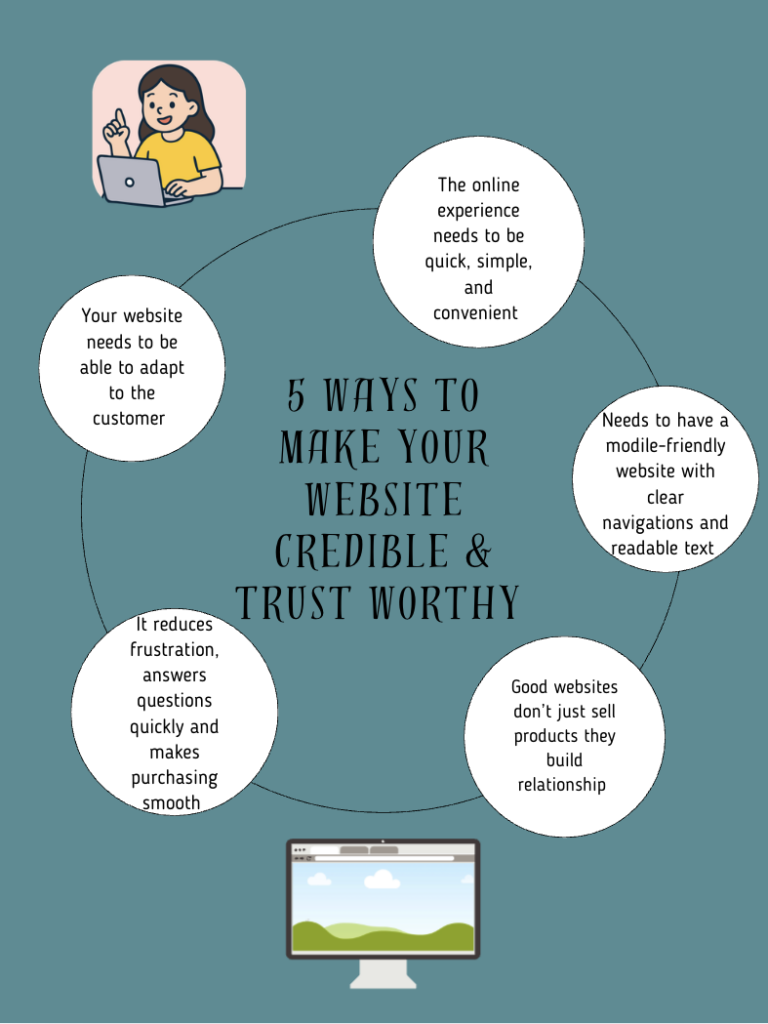
Your website should be able to adapt to the customer, not the other way around. When businesses design websites, they should focus on what makes the experience easiest and most comfortable for the user. This idea is known as user-centered design, which means creating a website that is built around the needs, behaviors, and expectations of customers. When websites are designed with the user in mind, they reduce friction in the buying process. Friction refers to anything that makes the process harder, slower, or more frustrating for the customer. The more friction a website creates, the more goodwill it can slowly destroy. Customers expect online experiences to be quick, simple, and convenient.
Another important part of user-centered design is making sure the website is mobile friendly. Mobile browsing now dominates online activity, and many customers primarily use their phones to search for products, compare prices, and make purchases. If a website is not optimized for mobile devices, it can create a very frustrating experience. For example, if users must constantly zoom in to read text, struggle to tap tiny buttons, deal with slow loading pages, or manually type information that should automatically fill in, they will likely leave the site and move on to a competitor. Mobile-friendly websites should have responsive layouts, clear navigation, readable text, and simple checkout processes that work smoothly on smaller screens.
Professor Wolters makes an important point: if your website creates extra work for customers, goodwill declines. Customers want easy navigation, auto fill options, smooth checkout, etc. The easier you make the process, the more goodwill you generate.
Destroying goodwill doesn’t just cost one sale, it can lead to negative reviews, lower customer lifetime value, reduced referrals, and poor brand reputation. Online reviews can spread fast, people will leave comments and reviews quickly if a site is bad.
If the solutions seem obvious, why do companies still make these mistakes? Some reasons are that there is lack of user testing, outdated systems, cost-cutting on websites, poor communication between marketing and IT.
Businesses sometimes prioritize speed or budget over user experience, especially when they are trying to launch a website quickly or reduce development costs. When users encounter issues on the websites, they are more likely to leave the website and look for alternatives from competitors who offer a smoother and more trustworthy experience. Over time, this loss of trust can damage a company’s reputation and reduce customer loyalty. Businesses may then have to spend even more money on marketing, redesigning their website, or repairing their brand image. Because of this, cutting corners online often costs more in the long run than investing in a well-designed, user-friendly website from the beginning.
In the video it talks a lot about what not to do, but there are some things to build goodwill. Like, reduce friction, be transparent about pricing, maintain clear content, respect customers data, and communicate clearly. Small improvements can have large impacts.
Some final thoughts from this video is that your website is not just a digital brochure. It’s your brand’s frontline employee. Every click, form submission, and checkout interaction either builds or destroys trust.
As Mark Wolters explains, many businesses don’t lose goodwill through dramatic scandals. They lose it through small frustrations that accumulate over time. Customers rarely announce when goodwill fades. They simply leave.
In a competitive marketplace, trust is one of your strongest assets. Protecting that trust requires attention to detail, transparency, and respect for customers. Because once customers start asking, “Should I really be shopping here?” the damage may already be done.
Good websites don’t just sell products, they build relationships. They earn confidence by creating an experience that feels professional, secure, and easy to navigate. When the website is clear and transparent, they feel reassured that the company is trustworthy and component.
When a business has strong goodwill, its website does more than function properly, it reflects the company’s values. It shows that the business respects its customers’ time, protects their personal information, and communicates honestly. A well-designed website reduces frustration, answers questions quickly, and makes the purchasing process smooth. As a result, customers feel satisfied rather than stressed.
On the other hand, weak goodwill creates hesitation towards the customer. Customers might second guess their purchase, not check out, and never return to the sight again. Businesses cannot afford to create unnecessary doubt especially when our competitors are one click away.
Professor Mark Wolters makes it super clear that having strong goodwill in a company is super important. It can take years to build and only seconds to damage. This is why businesses must treat their website as a tool that proves good insight to their customers. A thoughtful website does so much more than just make transactions but it builds professionalism and trust to the customer.
Goodwill is the total trust, positive reputation, and emotional connection a company builds with its customers over time. Customers feel confident choosing the brand, they believe the business is honest, reliable, and professional.
In the end, goodwill represents the overall relationship between a business and its customers. When companies prioritize trust, honesty, and positive user experiences, they strengthen that relationship and create a loyal customer base that supports the business for years to come.