How to Start a YouTube Channel in College
Written by: Colin McQueen:
Colin McQueen is a senior marketing student in the Gies College of Business at the University of Illinois at Urbana Champaign.
If you have ever thought about starting a YouTube channel, there is no better time than right now, while you are in college. With a campus full of stories along with relatable experiences, there is a plethora of content to be made. Not to mention the access to a built-in audience at your fingertips! The question is not whether you can start a YouTube channel as a college student. The question is whether you are ready to treat it like the real opportunity it is.
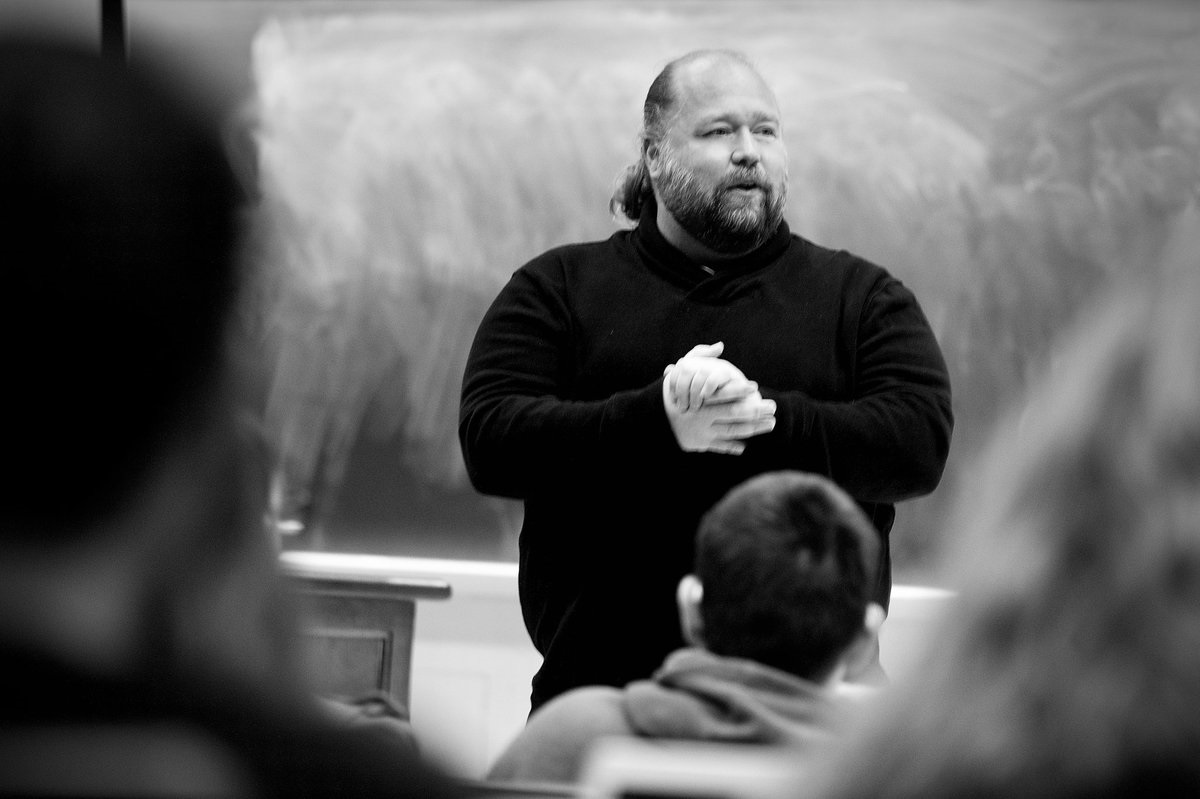
Professor Wolters, a business and digital media professor at the Gies College of Business as well as an accomplished social media content creator breaks down exactly what it takes for college students to kickstart their content creation journey on YouTube. His advice is practical, honest and rooted in real experience. In this blog, I will take his core points and expand on them, so you walk away with a compendious roadmap for launching and growing your channel.
Before diving in, it is worth noting that the skills you build as a content creator such as writing, editing, marketing, audience analytics, public speaking are the same skills employers are actively looking for. Starting a YouTube channel is not just a fun side project. It is a resume builder, a portfolio piece, and a personal brand all rolled into one. So even if you never hit a million subscribers, the process of building a channel will make you a stronger and more marketable professional.
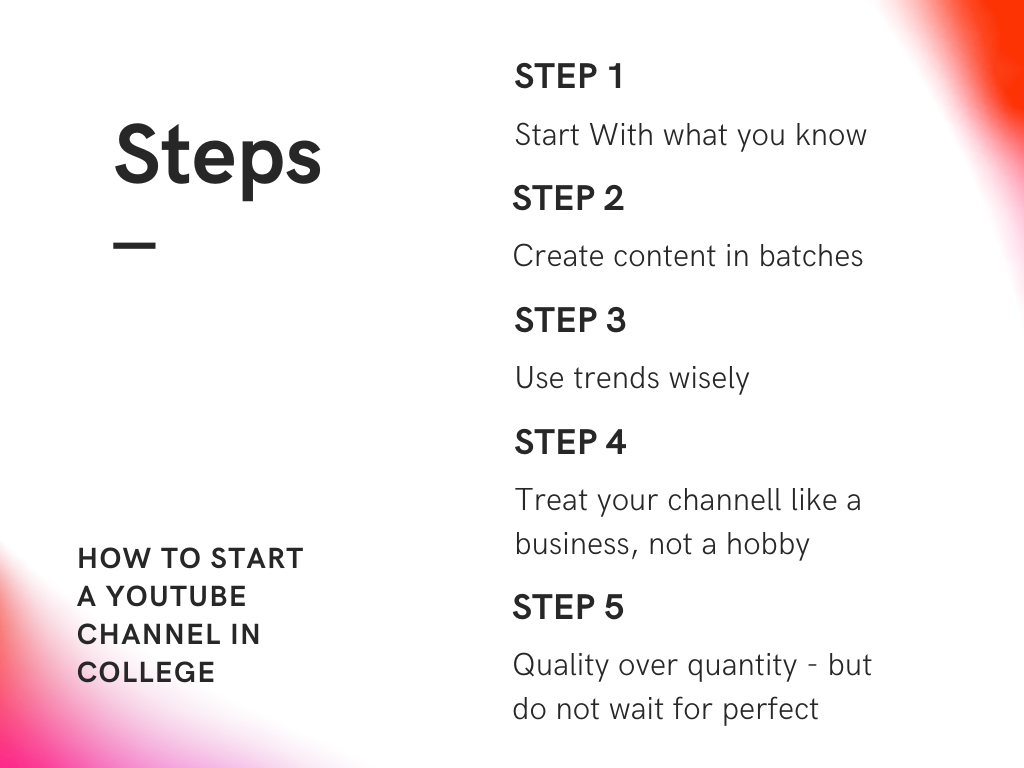
Step 1: Start With What You Know
As simple as it sounds, this is an ideal approach to not only gain traction but continuously grow your channel in the future. If you are a fashion person, make fashion content. If you play a sport, create sports content. If you are deep into Dungeons and Dragons, make D&D content. It does not matter how niche it seems, there is an audience for everything on YouTube. Starting with a topic that you already know is beneficial for a few reasons.
You sound credible. Something you already have knowledge of will show your audience that you are comfortable with the topic. You are not reading a script or second guessing yourself. The way you talk flows naturally and the viewers will notice.
You stay consistent. One of the biggest reasons most channels fail, or content creators give up is that they quit too early. When you genuinely care about the subject, you keep going even when the engagement is not there. If it is something you are passionate about, you may not even care about the numbers!
You create better content faster. Every time you sit down to film, you already have opinions, stories and knowledge to base your videos on. Instead of starting from nothing, you have a head start.
Think about your own life right now. What do people come to you for advice on? What could you talk about for an hour without running out of things to say? Do you have a specialty that could offer solutions to others watching? The answers to those questions could be a starting point for your content niche.
Step 2: Create Content in Batches
Student life in college can be overwhelmingly busy. The average college student faces a wildly inconsistent schedule. Finals week, midterms, part-time jobs and extracurricular obligations can wipe out your ability to film for a two or three week stretch. Any disruption in a set posting schedule will kill your momentum. An easy way to work around this and put out consistent content is to create it in batches. Make five or six videos in one sitting, on a day or weekend when you have the time. After this, make a schedule for the release of each video. Whether your goal is once or twice per week, or a more substantial content schedule, decide what videos are released when. Do that a couple of times a semester and you have months of content ready to go, even when life gets hectic.
How to create batches of content effectively:
Plan your topics in advance. Prior to your filming session, write out each video idea with brief outlines. Know what to say and what to film before the camera turns on.
Set up once, film multiple times. Be sure to arrange the lighting, camera angle and background before filming. This setup can be used to knock out multiple videos in one sitting. If the video is more interactive or not set in a single place, scope out a few possible filming locations. Remember, you can also film multiple takes and use the best one. The benefit of having a planned out filming situation is the freedom to film as much as you want.
Edit in batches. Once done with filming, it’s best to edit all of them over the course of a weekend or set period, then schedule their upload dates. Not only will you be in the flow of editing content but also improve editing skills in an efficient manner.
Build a content buffer. Try to always have at least two to three videos ready to go. This buffer is your safety net when life gets too busy.
Step 3: Use trends wisely
Trending content is a double -edged sword. Although trends, whether it be a viral dance, popular audio clip, challenge or video format, can help you reach a large audience very quickly, it can also take away from your niche. The exposure that comes from using trending content can push your videos to thousands of new viewers who would never have found you otherwise. That kind of exposure is valuable when you are just starting out and building your audience. On the other hand, if you only post trendy content without connecting it to your niche, you attract an audience that is there for the trend, not you. This introduces the risk of short term engagement without gaining subscribers or repeat viewers.
The best approach to take is to blend trends with your niche. For example, if you channel us about budget college living and a trending video format shows someone popping up in different locations, adapt it to fit your content. You can use the trends format, but the content is still entirely yours and still delivers value to your specific audience. A quick way to think about it: nobody goes to Burger King to order a Big Mac. You go to McDonalds for that. The same logic applies to your content.
Before jumping on any trend ask yourself these three questions:
- Does this fit my niche?
- Can I put my own spin on it?
- Will my audience actually appreciate it?
If you can answer yes to all three, go for it.
Step 4: Treat Your Channel like a Business, Not a Hobby
This is where a lot of student content creators hold themselves back. Many creators think of their channel as something fun they do on the side. And if that is all you want it to be, that is totally fine. But if you want to grow, you need to shift your mindset entirely.
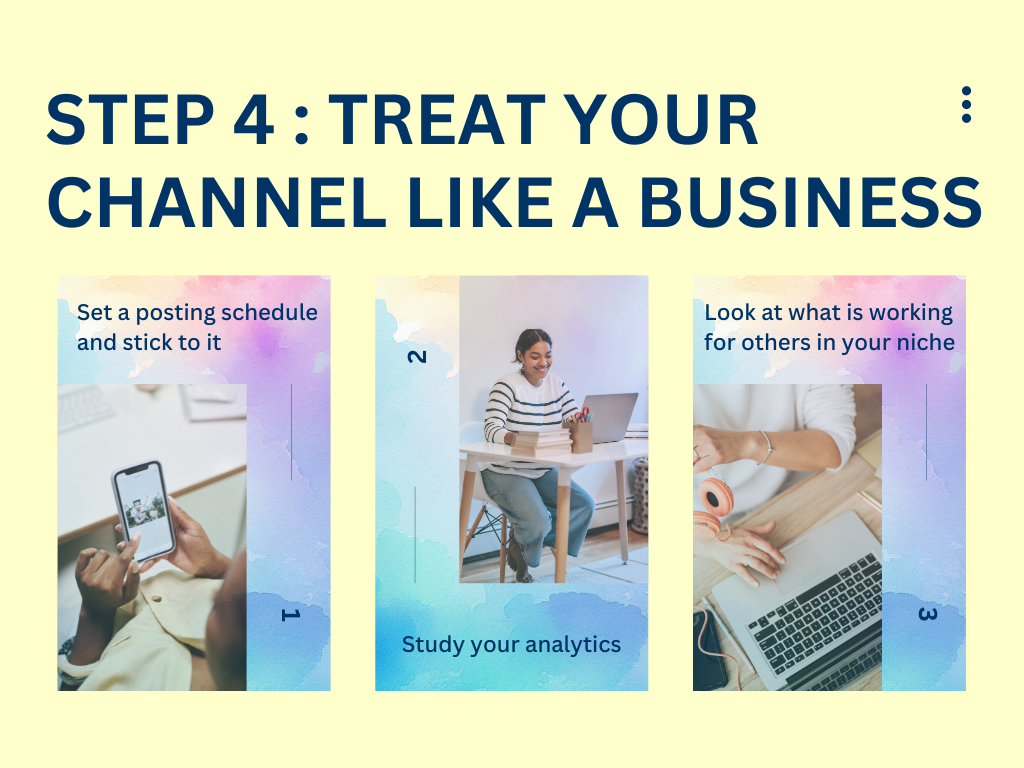
So how do you treat your YouTube channel like a business…
Set a posting schedule and stick to it. When you work a real job, you have deadlines. Treat your YouTube channel no differently. Whether it is once a week or twice a month, create a schedule to release videos and stick to it. Consistency builds trust with your audience and gains traction with YouTube’s algorithm signaling that your channel is active.
Study your analytics. One of the best ways to improve at anything is to see what works and what doesn’t. Looking at the data YouTube provides and incorporating it into your strategy will improve your content, not just the content you think is great. The analytics that YouTube provides, such as which videos people watched, where they dropped off, who your audience is, and what they want more of offer a chance to improve upon your channel.
Invest in your craft. This does not mean spending thousands of dollars on equipment. Rather, it means taking the time to learn more about your craft and how to promote it. Watch your favorite YouTubers or popular ones in similar niches. Attend workshops, read up on SEO. There are endless tools on the internet, and the fastest growing creators are those that are always learning.
Look at what is working for others in your niche. As mentioned before, there are going to be other creators within your niche. Take the time to watch not only those but other successful Youtubers to dissect what makes them unique. Study what you love about them and what you think doesn’t work. Not to mention the various YouTubers that make videos on how to grow your channel. Take those notes and build your own personal brand that leans into the things you love and avoids the things you do not.
When you shift your mindset and carry yourself like a professional, people will perceive you as one.
Step 5: Quality Over Quantity – But Do Not Wait for Perfect
To put it simply, put in the effort. It may seem obvious but the work you put in will reflect the product you put out. If you put out half hearted content, people will notice. Viewers won’t subscribe or interact and they won’t come back.
That does not mean you need a professional studio setup. It means you care about what you are producing. At the same time, do not fall into the idea that you need to be perfect right away. The best way to learn is by failing. It’s okay if your first video isn’t a masterpiece.
Make sure to follow these content quality checkpoints:
- Does this video deliver real value to my specific audience?
- Is the audio clear and easy to listen to?
- Does the video have a clear structure i.e. an intro, a middle and a conclusion?
- Are the long pauses, filler words and awkward moments edited out?
- Does my thumbnail and title accurately represent what is in the video?
If you can say yes to all five, you are ready to post.
Beyond the checklist, remember that your thumbnail and title are just as important as the video itself. They are the first thing a potential viewer sees before clicking on your video or page. It determines whether someone proceeds or keeps scrolling. Keep in mind that a strong thumbnail is important as it’s easy to read on a small phone screen. The title should include buzzwords such as those that someone would typically type into the search bar. On top of that, the title should give a clear visual hint at what the video is about. Think of your title and thumbnail as a mini
advertisement that grabs the attention of potential viewers.
Final Thoughts
Starting a YouTube channel in college may be the most opportune time to do it. It can benefit you professionally by building your personal brand, teaching marketing skills, video production, communication and data analytics. Not to mention the added benefits of the possibility of real income. Most importantly, however, it gives you a platform to share your voice, knowledge and creativity. Think about your life as a college student. What problems do you face daily that others might relate to as well. What is something that you enjoy that others would as well. The benefit of starting now is that you can morph your experiences into content. You don’t need to look hard for content, its already happening to you.
The path to success will not come overnight. Rome wasn’t built in a day, neither will your YouTube channel. But consistency, strategy and genuine effort will make a big difference if a successful channel is your goal. If you find a niche you love, treat it like a professional and the growth will come.