Influencer Fatigue and Why Audiences are Turning Away
Name: Anna Greda
Anna Greda is a senior at the University of Illinois Urbana-Champaign studying Marketing and Information Systems. As a passionate digital marketer, she explores the intersection of data-driven strategy and authentic brand storytelling.
Influencer Fatigue and Why Audiences are Turning Away
In the early 2010s, the term “influencer” was synonymous with “aspiration.” We followed travel bloggers to see the world and fashion fanatics to learn how to dress. But fast forward to today, and the word often triggers an eyeroll. There is a growing resentment toward the “influencer” lifestyle. For college students and recent grads entering the marketing world, understanding this behavior is crucial. We are witnessing the death of the “untouchable” creator and the birth of a more skeptical, high-stakes digital economy.
This shift isn’t just a trend; it’s a cultural realignment. To truly understand why the “aspiration” of the last decade turned into the “resentment” of this one, we must look at the transition from relatability to performance. Early influencers succeeded because they felt like the “cool older sibling” or a friend with great taste. Today, we’ve swapped that real connection for mass-produced content. When every “spontaneous” morning routine is sponsored by a supplement brand and every “honest” breakdown is timed for the release of a new affiliate link, the audience stops feeling like a community and starts feeling like a data point in a sales funnel.
The friction we see today is rooted in a fundamental breakdown of trust. It’s no longer just about “likes.” It’s about authenticity, ethics, and the psychological exhaustion of the “Parasocial Relationship.” While a ring light at a restaurant is a visible nuisance, the real root of influencer resentment lies deeper. As we analyze the systematic erosion of the authenticity currently reshaping the industry, we must ask: how can the next generation of marketers rebuild what has been broken?
The Death of the “Perfect” Aesthetic
One of the primary reasons people are removing themselves from the influencer world is due to over-filtering and unrealistic standards. We’ve all seen the unrealistic shots of a pristine Great Wall of China with no tourists in sight, or an influencer enjoying a “spontaneous” morning in Paris with perfectly curled hair at 5:00 AM. As Professor Wolters notes, these fake realities turn people off because they lack the one thing social media was originally designed for: reality.
Psychology of the Comparison Trap
Beyond the surface-level annoyance, there is a deeper psychological impact. Recent 2024 and 2025 studies from the University of Portsmouth reveal that constant exposure to over-filtered content fuels a “comparison culture.” This leads to higher rates of body dissatisfaction and social anxiety among followers. When a creator filters their face to look like a teenager when they are in their 40s, they aren’t just editing a photo. They are contributing to a distorted standard of beauty that the average viewer can never achieve.
This has led to a massive countermovement in 2026 known as “Skin Fasting” and “Ugly Content.” Audiences are now actively seeking out creators who show their acne, their messy apartments, and their travel mishaps. The “perfect feed” idea is dead, and the “authentic story” is the new standard. If you are entering marketing today, your goal shouldn’t be to make a brand look perfect, but to make it look human.
The “Hidden Ad” Problem
Nothing kills trust faster than a “favorite” product that was actually just a paid placement. Professor Wolters shares a story about a travel couple who had a new “favorite” city in Mexico every week. When creators fail to disclose sponsorships, they aren’t just being annoying, they are engaging in deceptive trade practices.
Deception Fatigue
As noted in The Conversation, the psychological bond between a follower and a creator is built on perceived intimacy. When an influencer sneaks in an undisclosed ad, that bond is severed. We begin to realize the “friend” giving us advice is actually just a salesperson. With the influencer marketing industry projected to hit $33 billion by 2025, the stakes for transparency have never been higher.
The prevalence of undisclosed sponsorships has resulted in a crisis of credibility, eroding the foundational trust between creators and their audiences. According to a 2024 Ethical Marketing Survey, 67% of consumers are experiencing marketing fatigue. They feel like they are being sold to 24/7, even when they think they are just watching a “Day in the Life” vlog. For a young professional, the lesson is simple: Honesty is your only currency. If your audience feels tricked into a purchase, they won’t just return the product, they’ll abandon your brand entirely.
“Main Character Syndrome” and the Rise of the “Anti-Fan”
We’ve all seen the videos of influencers blocking traffic or ruining a quiet dinner to get “the shot.” This behavior, often called “Main Character Syndrome,” is a major driver of influencer hate.
The Performative Crisis
This frustration has evolved into a fascinating digital phenomenon: the “Anti-Fan.” As reported by The Guardian, anti-fans are former followers who have turned on a creator. They don’t just unfollow; they “hate-watch.” They join “snark subreddits” to document every contradiction, every failed disclosure, and every instance of entitlement.
When an influencer acts like their content is more important than the people around them, like filming on a busy commuter train or a quiet restaurant, they are signaling that their digital persona is more valuable than their real-world community. In 2026, this lack of self-awareness is the fastest way to get “canceled.” Audiences are no longer willing to excuse bad behavior for the sake of entertainment.

Out-of-Touch Wealth Gap and the Empathy Gap
One of the biggest reasons people are hitting the “unfollow” button is that high-tier influencers have become incredibly out-of-touch. In a global economy where a lot of us are stressed about inflation or the cost of housing, watching someone cry because their “Lamborghini is the wrong shade of blue” feels less like aspiration and more like a slap in the face. Even something as small as complaining about a misspelled name on a Starbucks cup can alienate an audience that’s dealing with real-world problems.
“Marie Antionette Effect”
This is often referred to as the “Marie Antionette” effect, a total disconnect from the lived reality of the audience. When influencers flaunt extreme wealth without acknowledging their privilege, they create an “empathy gap.”
- The problem: Influencers who make minor inconveniences seem like world-ending tragedies.
- The result: Alienation. Audiences move from aspiration and excitement about the influencer, to resentment.
This disconnect is usually driven by the “always-on” nature of social media, which is a total performative trap. Creators feel this immense pressure to monetize every single private moment, from messy breakups to actual medical emergencies, just to stay relevant in the algorithm. As Flinque points out, this creates a massive “empathy gap.” When you’re filming yourself sobbing over a minor inconvenience while sitting in a multi-million-dollar mansion, your audience doesn’t feel bad for you, they feel insulted. It’s a clear sign of a creator economy that has started to prioritize engagement metrics over genuine human connection.
- De-Influencing
If you’ve spent any time on TikTok or Reels lately, you’ve likely seen the hashtag #deinfluencing. It has amassed over 1.5 billion views, and it represents a total 180-degree turn in the creator economy.
“Anti-Sell” Strategy
De-influencing isn’t just a trend. It’s a reaction to overconsumption. De-influencers gain massive credibility by telling people what not to buy. They expose “viral” products that are low quality and call out the scams of the influencer world.
In a world of “haul” videos, the “anti-haul,” is what earns a following today. This is a vital lesson for anyone in business: Trust is built by saying ‘no’ to the wrong things. By being honest about what doesn’t work, you become a trusted advisor rather than just another ingenuine voice online.
- “Parasocial” Burnout
The term “parasocial relationship” describes the one-sided emotional bond a follower feels with a creator. For years, marketers loved this because it drove intense loyalty. However, in 2016, we are reaching parasocial burnout.
Empathy Fatigue
When an influencer overshares every intimate detail of their life, from their bowel movements to their doctor’s visits, the audience eventually reaches a limit. There is such a thing as “too much information.” This oversharing often feels like a desparate attempt to stay relevant or “vulnerability porn,” using a personal tragedy to harvest views.
Recent research from Carleton University shows that this constant performance of “vulnerability” is damaging to the creators themselves. Influencers are suffering from burnout at record rates because they have no boundaries between their private life and their public brand. For the audience, this constant need for attention becomes exhausting, leading them to disengage entirely.
Fake Drama and the Inauthentic Apology
Influencers use “fake drama” to drive clicks, like faking visa problems in ten different countries in a row. When the drama is exposed as fake, the audience feels manipulated
“Crying Thumbnail” Trope
We’ve all seen the thumbnail of an influencer crying into the camera with a caption like “I’m so sorry.” However, these apologies often feel inauthentic because they only happen once the sponsors start pulling out.
New Rule of Crisis Management: If you mess up, be human. Don’t be “PR-polished.” The digital audience in 2026 is hyper-aware of “corporate speak” and “influencer jargon.” If an apology feels like it was written by a lawyer, it will be rejected.
Why Niche Creators are Winning
A major point of frustration is influencers acting like experts in fields where thay have zero credentials. We see lifestyle vloggers giving medical advice and pranksters teaching “wealth management.”
The Shift to Key Opinion Leaders
As LinkedIn and The Conversation have noted, the digital world is desperate for creators who don’t want to be “influencers.” We are seeing a massive shift toward niche creators. People would rather listen to:
- An actual astrophysicist talk about space (like Neil deGrasse Tyson).
- A marketing professor talk about brand strategy (like Professor Wolters).
- A professional chef talk about food, rather than a “foodie” who just takes pictures of it.
Data from 2025 shows that 62% of people are now more interested in creators who produce educational content rather than just pure entertainment. This is a huge opportunity for current students. You don’t need a million followers; you need credibility. Micro-influencers (10K–100K followers) who focus on a specific skill are seeing engagement rates that triple those of generalist celebrities.
Why “Influence” is No Longer a Safe Bet
From a corporate perspective, the “hate” for influencers is a massive liability for brands. When a company partners with an influencer who is perceived as “out-of-touch” or “disrespectful,” the brand inherits that negative sentiment. In the business world, we call this Brand Rub-off, and in 2026, it is increasingly toxic.
Pivot to the Micro-Experts
If you are managing a marketing budget today, you are likely shifting funds away from the “lifestyle celebrity” and toward the Micro-Expert. These are creators who have between 5,000 and 50,000 followers but possess deep, specialized knowledge in a specific vertical, like sustainable fashion, B2B software, or ethical travel.
The data is clear: while a mega-influencer might have the “reach,” the micro-expert has the resonance. Because they aren’t “acting like experts” but actually are experts, their recommendations don’t trigger the same skepticism or “hidden ad” resentment.
How to Succeed in the “Post-Influencer” World
If you are a student or a young professional looking to build a digital presence, don’t aim to be an “influencer.” Aim to be a value-driven creator.
- Influencer Focus: ego, aesthetic, “look at me,” metrics.
- Value-Driven Creator Focus: audience, utility, “how can I help,” credibility
Strategies for the New Era
- Prioritize Utility Over Vanity → Every post should answer the question: “How does this make my audience’s life better, easier, or more informed?”
- Respect Your Environment → If you’re filming in public: go early, stay out of people’s way, and respect the community you’re producing content in.
- Establish Boundaries → You don’t have to share your “blood tests” to be authentic. Professionalism still matters, even on social media.
- Embrace De-Influencing → don’t be afraid to tell your audience when a product isn’t right for them. It will make your “yes” a thousand times more powerful.

The Future is Ethical
The “influencer” as we knew them, the untouchable, perfectly filtered celebrity is a dying facade. The people “hate” influencers not because of their success and flexibility, but because of the deception, entitlement, and lack of value that has permeated the industry.
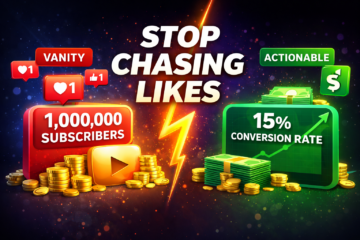
As we move toward a more transparent digital future, the winners won’t be the ones with the most likes, but the ones with the most integrity. We must move away from “influencing” and toward advocating.
Read More: How to Choose an Influencer in 7 Steps
Read More: Get More Clicks without Using Clickbait