5 Things B2B Businesses Should Stop Doing on Social Media
By Ishita Kapur
Ishita Kapur is a senior at the University of Illinois studying Marketing & Information Systems. Ishita is highly interest and specialized in social media marketing and has prior work experience in the field.
Social media has become one of the most important tools for businesses for the past few years. Almost all businesses have some kind of online presence on platforms like LinkedIn, Instagram, or Twitter. For business-to-business (B2B) companies, social media can be a highly effective way to connect with potential clients, build credibility, and share expertise. However, many B2B businesses see social media to only be effective for B2C (business to customers). As a result, many B2B businesses still struggle to use social media effectively.
In the video 5 Things You Need to STOP Doing on Social Media if You Are a B2B Business, Professor Wolters talks about several common mistakes that business make when they manage their social media accounts. These mistakes often hinder businesses from really taking advantage of the all the cost effective & relatively easy opportunities social media provides. Instead of really understanding the purpose of posting & realizing what each social media can offer to develop relationships or trust with their audience, a lot of companies end up posting content that their target audience simply ignores or scroll past because it doesn’t relate to them.
This video explains that B2B social media usage should not just be about advertising products & services. Instead, B2B social media usage should really be about providing value for the target audience, connecting with as many people as they can, and building meaningful long-term relationships with their audience. As soon as more B2B businesses can understand this, their social media efforts & content creation will become much more effective.
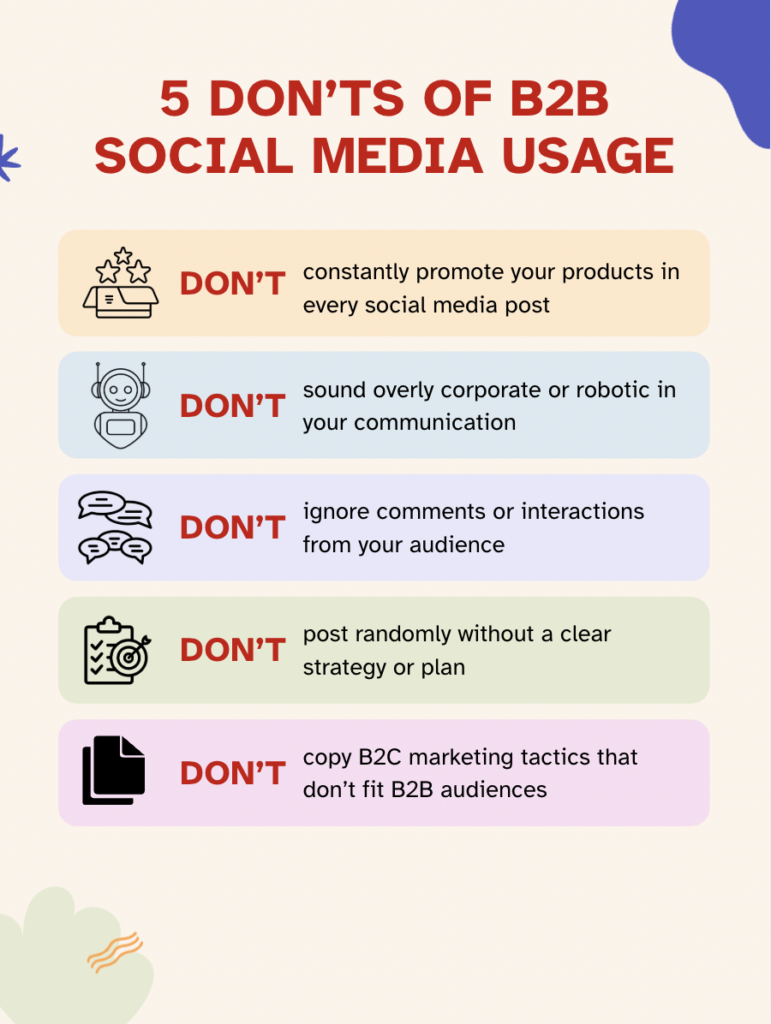
There are 5 main things that B2B companies should try to stop doing on social media. Those include: constantly promoting themselves and their services, sounding too corporate-y, ignoring engagement, posting without a specific strategy or plan, and copying B2C marketing tactics without adapting them to their own industry.
Stop Constantly Promoting Your Product
The main error that B2B companies make on social media comes from their choice to use social media as an advertising network to showcase all they do. The company needs to fill its website with all the content that promotes their products and services and current sales they might be offering. However, social media users typically don’t want to view the kind of content that is clearly meant and would be logical for business purposes. The people that are on social media use it to find content which interests them instead of viewing ads. People who use LinkedIn for professional purposes tend to focus more on discovering new information while viewing industry trends and reading innovative concepts. A company social media page that posts only promotional content will eventually start to lose its value to their followers and viewers through its repetitive and un-engaging nature. If every post is about selling something, people may start to feel like the company only cares about making sales rather than helping their audience.
B2B companies should instead switch their product advertisements for valuable information which they want to share with their audience and content their audience should know about the company. For example, they could post tips related to their industry, discuss new trends, or explain solutions to common problems. Content like this helps people learn something useful, which makes them more likely to follow the company and trust its expertise.
Research also supports this idea.
According to a guide by HubSpot, valuable and educational content actually help businesses attract audiences and build trust over time rather than relying on constant and repetitive sales messaging. You can read more about this strategy here: https://blog.hubspot.com/marketing/content-marketing
Over time, this kind of content is what it takes for businesses to establish themselves as a thought leader in its industry, more than just any other company. When possible customers eventually need a product or service from someone, they will be more likely to remember the company that provided helpful insights rather than the one that would post the same boring content that made them want to unfollow the account.
Stop Sounding Too Corporate
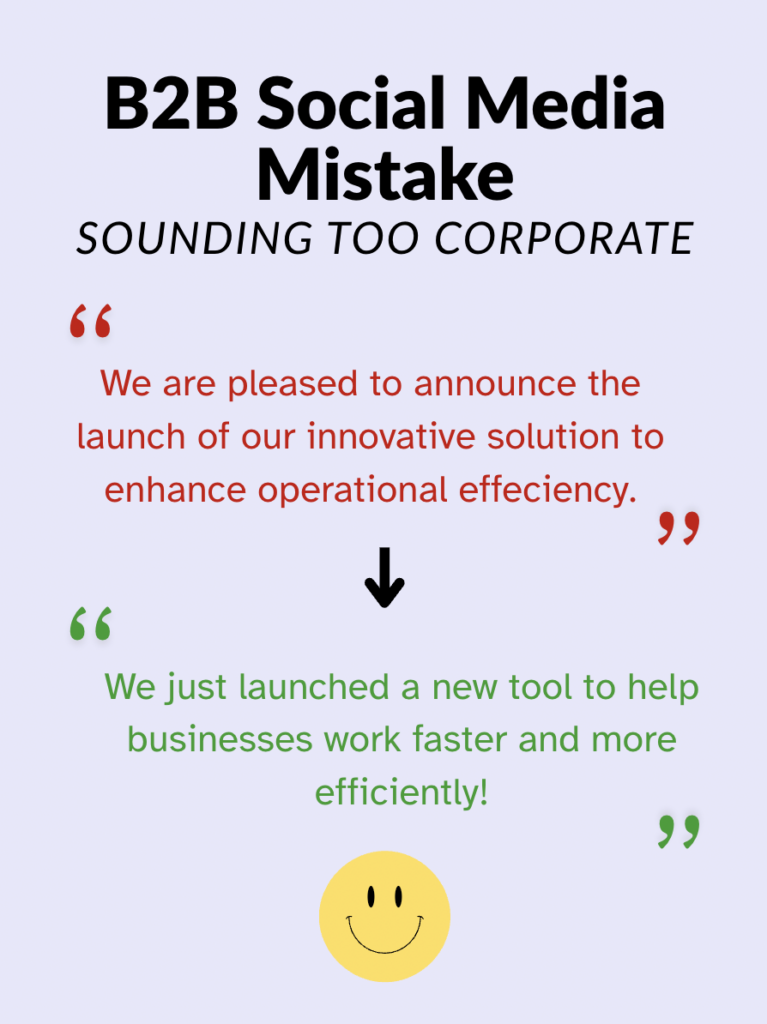
Another problem that this video discusses is the way many B2B companies communicate on social media and the language they use in their posts. A lot of businesses use incredibly formal or corporate language when writing posts. While professionalism is important, especially for public accounts for a business, this kind of tone can make social media content feel stiff and impersonal.
Social media is meant to be social and informal. It started as a place for people to connect, communicate, and laugh at memes. As the usage of social media has changed, the style of it has not. People are on social media as a way to de-stress from all the corporate jargon they discuss all day. People want to feel like they are interacting with real humans, not just a company logo or marketing department witch very cold & rehearsed responses. When posts sound too formal or robotic, it becomes harder for audiences to connect with the brand, which in the long run can harm the brand.
For example, some companies write posts that sound like official press releases (long, formal, and very diplomatic). These posts would probably include complicated sentences, technical jargon that is not understandable to the average read, or overly polished language. While this might work in a formal report or an actual press release, it usually does not work well on social media. It would be the kind of content that people will scroll right past.
Instead of such formal and trained responses and communication, businesses should try to communicate in a more natural and conversational way. This does not mean they should become unprofessional and start cursing or using bad slang, but their tone should feel more approachable. Writing in a clear and simple style makes posts much quicker & easier to read while also more engaging, even if it is conveying a similar message.
Another way companies can sound more human is by sharing stories or experiences from their team, like real world stories. For example, employees could talk about challenges they faced while working on a project or lessons they learned in their industry, or what made them want to join the business. This type of storytelling content makes the company feel more relatable and authentic.
A lot of other marketing experts also emphasize the importance of authenticity in social media communication. According to research from Sprout Social, audiences respond more positively to brands that communicate in a genuine and relatable way. More information about brand authenticity and social media can be found here:
https://sproutsocial.com/insights/authenticity-on-social-media/
When social media viewers feel like they are interacting with real people and not just a faceless corporation who don’t care about their customers, they are way more likely to engage with the content.
Stop Ignoring Your Audience
A 3rd mistake B2B companies often make is ignoring engagement on their social media posts. Some businesses treat social media like a one-way communication channel where they simply post content and move on without responding to viewer feedback or comments. They rarely respond to comments or interact with their followers by occasionally commenting on posts they come across.
This approach skips past one of the most important aspects of social media: CONVERSATION. Social media platforms are made to encourage interaction between different users. When companies don’t participate in these kinds of banter-like conversations, they lose an opportunity to build relationships with their audience.
For example, if someone leaves a comment asking a question about a post or a product and the company never responds, it makes the brand seem uninterested or disconnected. On the other hand, responding to comments shows that the company values its audience and is willing to engage with them.
Even simple interactions can make a big difference. Thanking someone for their feedback, answering a question, or acknowledging a complaint can help build trust with followers. These small interactions show that the company is paying attention and cares about its community.
Engagement can also grow the reach of social media posts. Many platforms use certain algorithms that prioritize content with higher engagement. When people comment, like, or share a post, it signals to the social media platform that the content is interesting or valuable and should be visible to more people.
Because of this, responding to comments and encouraging discussion can help companies reach a larger audience.
Stop Posting Without a Clear Strategy
Another fairly common mistake that businesses make is posting content without a clear plan or strategy in mind with what they are trying to achieve with posting on social media. Some businesses post randomly whenever they have something to share, while others may post inconsistently – either way, they don’t have a clear intent with what they want to get across and what they plan to do with the engagement that will come from the post. Without a clear direction, it becomes difficult to achieve meaningful results from social media efforts.
A strong social media strategy starts with clear goals. Companies should think about what they want to accomplish through their social media presence. For example, they might want to increase brand awareness, build credibility, generate leads, or attract new employees.
Once these goals are identified, businesses can create content that supports them. For instance, if a company wants to build authority in its industry, it might focus on sharing expert insights, research findings, or educational content.
Planning social media content ahead of time can also make social media management easier since future content has already been accounted for and trends can be easier to use for content. Many companies create content calendars to organize their posts and ensure they are posting consistently. A content calendar helps businesses stay organized and maintain a steady flow of posts.
Having a strategy also allows companies to measure their progress. By tracking certain metrics such as engagement, reach, and follower growth, businesses can see what types of content perform best with different audiences and apps – and adjust their strategy accordingly.
According to Hootsuite’s social media marketing research, businesses that create clear strategies and track performance metrics are more likely to see positive results from their social media efforts. You can explore their research and marketing insights here:
https://blog.hootsuite.com/social-media-marketing/
Stop Copying B2C Marketing Tactics
The last mistake mentioned in the video is when B2B companies try to copy strategies used by business-to-consumer (B2C) brands. While both types of businesses use social media, their audiences and goals are very different.
B2C marketing often focuses on using an emotional appeal, entertainment, and quick purchasing decisions. For example, a clothing brand might post trendy photos or influencer collaborations to attract customers to buy or go visit their website instantly.
B2B marketing, however, usually involves more complex decision-making since business employees take time to make bigger organizational decisions. Businesses often take longer to choose a product or service because the stakes are higher. Decisions may involve multiple people, budgets, and careful research.
This does not mean B2B content has to be boring. Creativity and storytelling can still be important because B2B buyers are still the kind of people that are engaging with B2C content. However, the content should focus on solving problems, sharing expertise, and helping the audience make informed decisions.
For example, B2B companies can share case studies that show how their products helped solve a problem for a client. They can also publish industry insights or explain emerging trends that may impact their audience’s businesses.
Conclusion
Social media has become a very powerful and cost-effective tool for businesses, but it must be used correctly to be effective. The video highlights the many mistakes that B2B companies often make, including over-promoting their products, sounding too corporate, ignoring engagement, posting without a strategy, and copying B2C marketing tactics.
Avoiding these mistakes can help businesses create stronger and more meaningful connections with their target markets. Instead of using social media as a place to just advertise, companies can focus on providing value, sharing knowledge, and building relationships by using the tips in the video and this blog.