How to Choose the Right Influencer for Your Brand: 7 Simple Steps
By: Priscila Moreno, UIUC Undergraduate Student at the Gies College of Business
How to Choose the Right Influencer for Your Brand: 7 Simple Steps
Have you ever seen an influencer work with a brand and thought to yourself “huh that does NOT align” or “I don’t see the vision.” Unfortunately, it happens all the time, especially with the rise of social media influencers on TikTok and Instagram.
There are some good ones out there though, such as the Charli D’Amelio x Dunkin collab and the Paloma x NYX endorsement. These worked because the influencers not only had the views and the reach, but also personally aligned with the brand’s value and products. Charli had a Dunkin coffee obsession prior to the collaboration, and Paloma had a whole series dedicated to finding a NYX lip liner in the shade cold brew dupe.
Influencer marketing has become one of the most powerful tools for businesses to reach and engage with new audiences. But it all comes down to choosing the right influencer for your brand! It’s not enough to just pick a popular influencer but you really must dig deep and find influencers that resonate with your brand. Honestly, it might be the influencers that you least expect to make the biggest impact on your business. So, do you want to flop or not? If not, then I suggest you keep reading! This blog will help you decide which influencer is right for your brand!
Step #1. Start by Researching Your Industry
The first step in choosing the right influencer is understanding who the big names in the industry that are driving the industry. Every industry has individuals who consistently create content related to that field and are widely known within that specific community. These are the people who start trends, drive discussions, and influence the audience’s perceptions of products.
For example, in the food industry, influencers might focus on cooking and baking tutorials, restaurant reviews, and food travel experiences. In the beauty industry, influencers might focus on new product reviews, get ready with me’s, and beauty tips. Each industry has their own influencers with their own niches, which include industries like fitness, fashion, technology, travel, and gaming. These influencers produce content about their specific topics for their communities online.
Identifying who these individuals are helps businesses and brands understand who holds influence within their niche. It also provides insight into what conversations are taking place within a specific industry, what products or services are being discussed, and can help identify what might be a good area to tap into.
Researching your specific industry involves exploring multiple platforms as influencers are scattered across platforms. This includes social media such as TikTok, Instagram, YouTube, and yes even Facebook. Pay attention to the creators who are consistently producing relevant content and who pop up frequently in discussions. Also, keep an eye out for which influencers receive strong audience engagement through views, likes, and comments. Observe the type of content these individuals produce and ask yourself if it’s the type of content you want your business or brand associated with.
So, the next time you’re trying to decide which influencer to collaborate with, start by researching your industry and finding those big-name individuals.
Your first goal should be to identify the creators who consistently produce content about topics related to your business or brand.
Step #2. Identify Who People Actually Trust
Have you ever scrolled through TikTok, and seen people promote a product that you just know they’ll never use or consume? For example, there are famous beauty influencers out there that promote a new foundation or lipstick that they’ll never use, and do you trust them? Of course not! Why? Because popularity and influence are NOT the same thing!
Yes, some creators may have millions of views and tons of followers because their content is entertaining or visually appealing, but that doesn’t necessarily mean that audiences trust their advice. For example, someone who posts extreme travel adventures like “jumping off the biggest cliff in the world” may attract millions of viewers who love watching thrilling videos. However, this does not exactly translate to the viewers wanting to jump off the cliff themselves or even trust the influencer’s advice about destination recommendations.
Creators, however, who consistently provide helpful information and honest product reviews might have fewer followers, but extremely loyal and a highly engaged audience.
There are several important questions you should ask when evaluating influencers:
- Does their audience trust this influencer’s recommendations?
- Are viewers engaging with their content through comments, likes, and shares?
- Do followers ask questions or seek advice from them?
- Do followers act on the influencer’s recommendations?
It is without a doubt that a trusted influencer can have far more impact than a large creator whose audience watches purely for entertainment. Why is this? It’s because trust is the foundation of influencer marketing!
The goal is to build trust because without it, individuals won’t care!
Step #3. Understand the Topics They Focus On
After finding the influencers that viewers trust, it’s now time to understand their content before they make content for you. This step will shine light onto whether or not an influencer might be the right fit for your brand!
Each industry niche has its own core subjects that dominate conversations. Some examples are:
- Beauty niche -> lip stain reviews
- Fashion niche -> top trends for the Spring
- Digital platform niche -> algorithm changes
These topics often represent the issues audiences care about the most and influencers who consistently provide helpful information about these topics tend to build stronger credibility.
It is important to note, however, that there are influencers who rely on click-bait and fear-based content to attract views. Even though it might attract views, it is not sustainable in the long run. It makes it difficult to create lasting trust, meaningful engagement, and gets old quickly.
When evaluating influencers, look for creators who focus on providing valuable and informative content rather than those who use click bait for views. Those who offer helpful information and real insights are more likely to persuade their audience when recommending products.
The goal is to find influencers who make meaningful content, not those who use click-bait for views (unless that’s your vibe).
Step #4. Do a Deep Dive Into Their Content
Thought we were done? Think again! Now that we’ve narrowed in on our influencers, it’s time to do our homework. The key? Research!
It’s not enough to see what lays on top, such as follower count or profile page. Rather, dive deeper into their page, watch their videos, read their posts, and review their past collaborations! This will give you all the resources necessary to truly evaluate whether they are a potential influencer you’d want to work with.
A specific list of items to look for include:
- Overall content quality
- Communication style and tone (humorous, educational, etc.)
- Consistency of their messaging
- The type of audience they attract
Another important aspect to investigate is to examine how influencers handle their brand partnerships. Many influencers promote products through paid advertising or sponsorships, but the way they integrate these promotions with their content can vary significantly.
There are multiple influencers who incorporate brands into their content in a natural and authentic way. For example, if Sabrina Carpenter did a collaboration with a fashion company it would make sense based off her recent Short n’ Sweet tour aesthetic. Others may present promotions that feel forced or inauthentic. For example, a fitness influencer promoting a high-calorie sugary drink. It’s important to aim to work with influencers who integrate collaborations, promotions, or sponsorships in a way that aligns with their content style!
The goal is to work with influencers whose content aligns with your business authentically.
Step #5. Evaluate Their Brand Personality and Values
Even if the numbers are high and the credibility is strong, an influencer may not always be the right fit for a particular business. One of the most important aspects of influencer marketing is the alignment between a brand’s values and the influencer’s values.
Online, we can see that each individual influencer has their own unique personality, voice, tone, and style. Their content differs also, whether it’s education, humorous, or edgy commentary, it’s important to understand the style that an influencer has curated for themselves. Understanding their style is essential for determining whether the influencer may represent your brand in the best way possible.
For example, a family-oriented brand may prefer influencers whose content is positive, educational, and suitable for younger audiences. Partnering with a creator who frequently posts controversial or inappropriate content could create negative reactions from customers and place the brand in a negative light.
Influencers may also decline partnerships if the brand does not align with their personal values. For example, an influencer who promotes and educates their audience on responsible financial behavior would not want to collaborate with brands that promote or involve gambling or risky financial decisions.
The goal is to evaluate the chosen influencer’s brand values and see if they align with your business’ brand values. This creates authenticity and a natural type of feeling.
Step #6. Review the Influencer’s Media Kit
Once you’ve identified a promising influencer, it’s time to review their media kit! Don’t know what a media kit is? Here’s the brief overview!
A media kit includes:
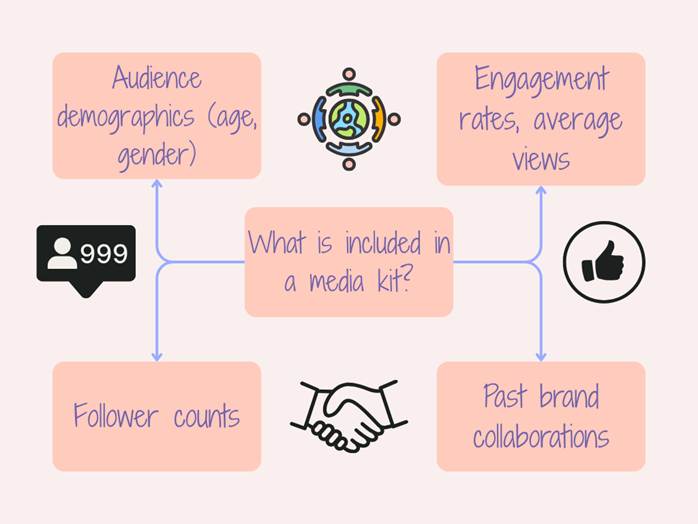
Infographic 1: Media Kit Outline
If you’d like to learn more about what a media kit entails, read the following article by Later.com: https://later.com/social-media-glossary/media-kit/.
This information helps businesses determine whether the influencer’s audience matches their target market. For example, if you’re a business targeting young adults, it may not be beneficial to partner with an influencer’s whose primary audience consists of middle-aged viewers. Additionally, if a brand is targeting a specific geographic region for a product launch, they may prefer influencers with audiences concentrated in that geographic area.
The goal is to use the media kit to ensure that marketing efforts will reach the right audience.
Step #7. Check Previous Collaborations
One important piece of information that media kits reveal are the past brands the influencer has worked with! This is important as influencers may have recently partnered with a competitor or an audience may associate them strongly with another brand. For example, a Coca Cola sponsor may not want to collaborate with an influencer who is known for collaborating with Pepsi.
It’s also important as you may want exclusiveness in certain partnerships to ensure audience engagement, and the media kit gives you that information! Understanding an influencer’s collaboration history helps you make better strategic decisions!
The goal is to evaluate how effective a future partnership might be through past collaborations.
Building Successful Influencer Partnerships
Selecting the right influencer is only the first step in building a successful influencer marketing initiative. Once the right partner has been identified, businesses should focus on creating collaborations that feel authentic and beneficial for both parties.
Successful partnerships often involve clear communication, creative freedom for the influencer, and realistic expectations regarding results. Influencers understand their audiences better than anyone else, so allowing them to present the brand in their own voice can lead to more effective and authentic campaigns.
Over time, long-term partnerships can also be more valuable than one-time promotions. Repeated collaborations allow influencers to build deeper connections between their audiences and the brand.
Final Thoughts
Influencer marketing offers incredible opportunities for businesses to connect with new audiences and build trust in ways that traditional advertising cannot achieve. However, the success of an influencer initiative depends heavily on choosing the right individual!
Instead of focusing solely on the numbers, businesses should carefully research their industry, identify trusted voices, analyze content topics, investigate influencer credibility, and evaluate brand alignment. Reviewing media kits and engagement metrics further helps ensure that the influencer’s audience matches the brand’s target market!
By investing time in research and thoughtful evaluation, businesses can form partnerships that feel authentic, trustworthy, and deliver meaningful results.
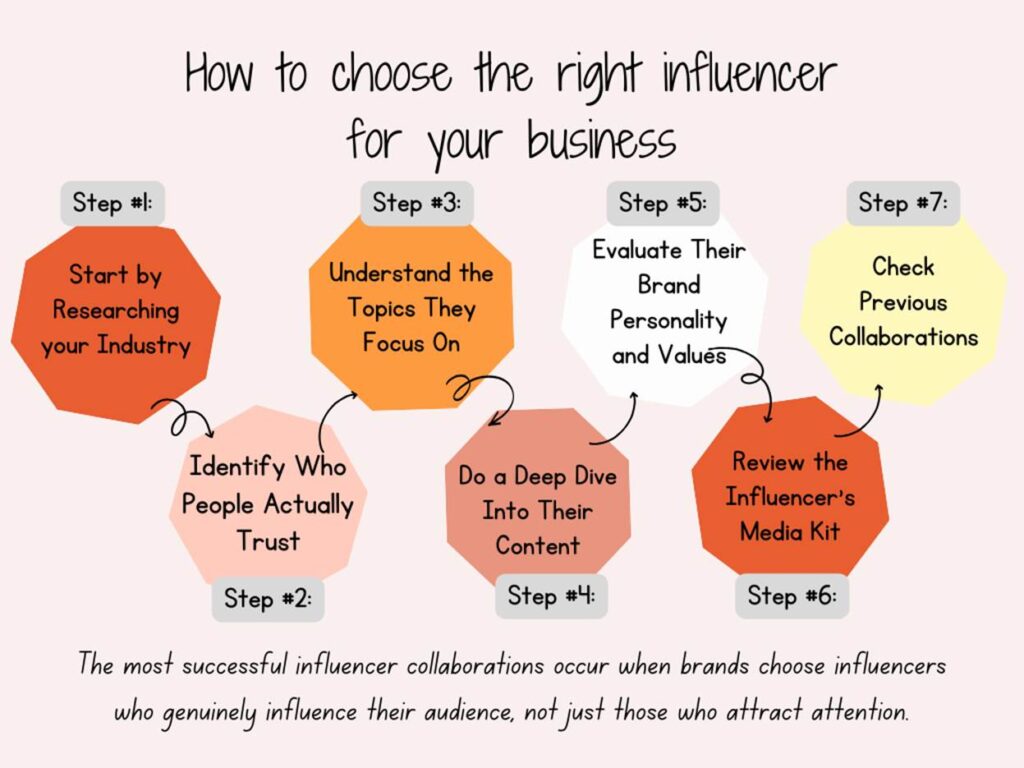
The most successful influencer collaborations occur when brands choose influencers who genuinely influence their audience, not just those who attract attention.
Infographic 2: How to Choose the Right Influencer for your Business