Why Influencers Go Broke: Financial Lessons for College Students and New Graduates
Why Influencers Go Broke: Financial Lessons for College Students and New Graduates
Neela Gilbert is a senior at the University of Illinois Urbana-Champaign, studying Finance and Marketing. Her interests include financial literacy and social media marketing.
10 Reasons Why Influencers GO BROKE
Scroll through social media and it’s easy to assume influencers are making a fortune. Luxury vacations, designer clothes, and brand deals fill their feeds, creating the image of effortless wealth. Even ‘micro influencers’, or influencers with 10,000-100,000 followers, can receive PR packages, free trips, and more. To many college students and recent graduates, becoming a content creator can look like a dream career. All you have to do is post frequently and stay on trend, right?
But being an influencer isn’t as easy as it seems. Many influencers struggle financially, and some even go broke. Social media income is unpredictable, expenses can add up quickly, and the pressure to maintain a certain image can lead to poor financial decisions. A lack of financial literacy or a business plan can end your influencer career faster than getting cancelled.
Understanding why influencers run into money problems can offer valuable lessons, for anyone starting their career after college, not just influencers. The same financial principles that affect influencers also apply to entrepreneurs, freelancers, and professionals navigating the modern digital economy. Whether you’re interested in creating content, or you just received your first ‘adult’ paycheck, these tips are for you!
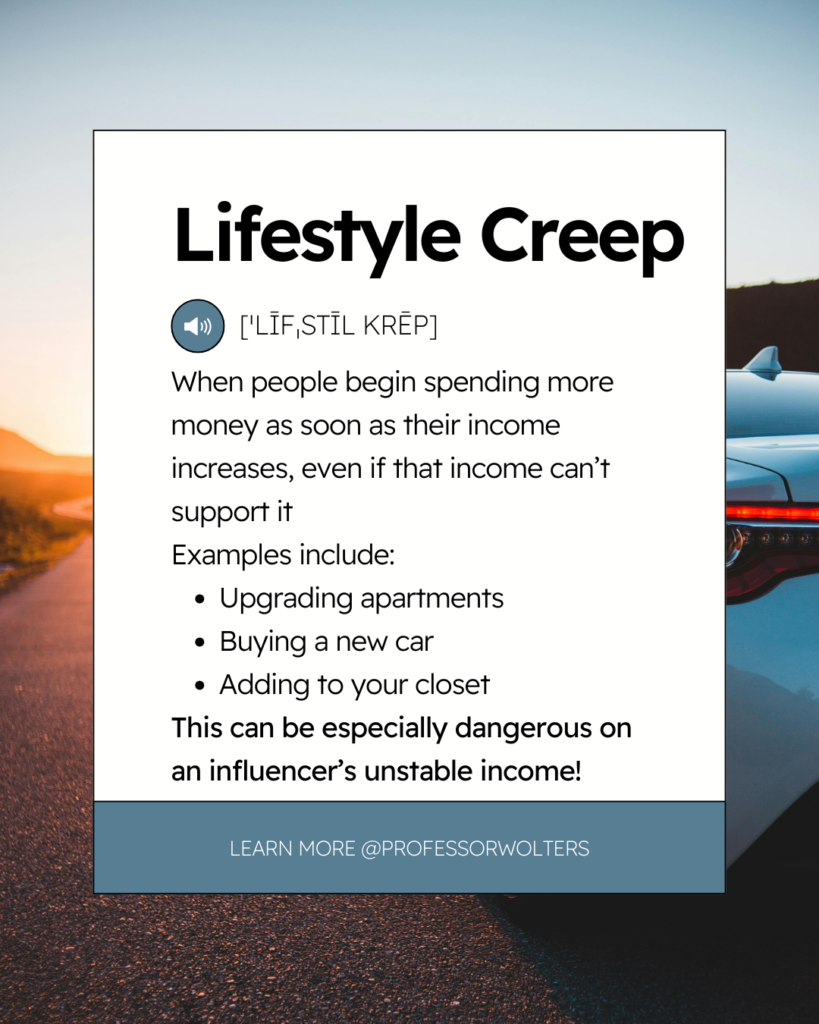
The Trap of Lifestyle Creep
One of the biggest financial mistakes influencers make is something known as lifestyle creep. Lifestyle creep happens when people begin spending more money as soon as their income increases, even if that income can’t support it. This could mean buying fancier clothes, upgrading their car, or switching from shopping at Aldi to Whole Foods. Lifestyle creep doesn’t mean buying a Lamborghini the moment you get a raise; it’s just as simple as living above your means.
For influencers, this often happens quickly. A creator might start making money from sponsorships, ad revenue, or affiliate links and assume that this income will continue indefinitely. That first paycheck with a few 0s at the end can change that slow and steady mentality in an instant. As a result, they begin spending more on things that reflect their online image: nicer apartments, expensive travel, designer clothes, or luxury accessories.
Why would this be a problem if it reflects an increase in income? Well, the problem is not the spending itself, but the stability of influencer income. A creator might earn a large amount in one month and much less the next. If their lifestyle has already adjusted to the higher income, even a temporary drop in revenue can create serious financial stress. Those car payments don’t spare any mercy!
For new graduates entering the workforce, this is a valuable lesson. Early career raises and promotions can make it tempting to increase spending, but building financial stability requires resisting that urge and prioritizing savings. This doesn’t mean you have to spend at the same level forever. Instead, be cautious with a bigger salary and take the time to ensure your income is stable. Maybe that’s waiting for a certain milestone at the company, or for your 401K to be fully vested before upgrading your couch!
The Rollercoaster of Creator Income
As described before, influencer income can vary dramatically from month to month. Advertising rates fluctuate, sponsorship deals come and go, and audience engagement can change without warning. More recently, social media apps have been known to change their algorithms, leading to influencers losing their audience.
Seasonality can also play a role. For example, travel creators may earn more during peak travel seasons and significantly less during slower periods of the year. Other creators might see spikes in income when a video goes viral, followed by months of average or below-average earnings.
This unpredictability makes financial planning challenging. If creators budget based on their highest-earning months rather than their average income, they can quickly run into trouble during slower periods. This goes back not only to lifestyle creep, but budgeting using the spending you’re currently at. Before you can think about increasing your spending, you need to evaluate if your current level is able to be maintained.
Young professionals can learn an important lesson from this: income volatility is becoming more common in modern careers. Freelance work, gig economy jobs, and commission-based roles all share similar challenges. Even now, with entry level jobs facing high unemployment, young grads need to plan for the inevitability of not starting a job the moment they graduate. Building an emergency fund and planning for fluctuations in income are essential skills, covered further in the Financial Literacy section below.
Content as a Business, Not a Hobby
Another reason influencers struggle financially is that they fail to treat their platforms like real businesses. Many people start creating content because they enjoy it, but turning a hobby into a sustainable income stream requires a different mindset. Especially once they have enough followers or ads to monetize, they fail to switch their strategy.
Successful creators think strategically about how their content generates revenue. They consider questions such as how they will monetize their audience, what products or services they might offer, and how they will grow their brand over time. This also means evaluating if they serve a niche versus a general audience, curating their content, and understanding their brand.
Without this kind of planning, many influencers rely entirely on ad revenue or occasional sponsorships. These income sources can be unpredictable, and without additional revenue streams, a creator’s earnings may remain unstable. If you’ve ever seen one of these videos, you’ll understand how unpredictable influencer income can be.
Thinking like a business owner allows creators to build more sustainable models. Some develop digital products or educational courses, that direct their audience away from algorithmic social media to more dependable income. The key difference is planning ahead, rather than relying on luck.
For college students, this highlights the importance of strategic thinking in any career path. Whether you want to start a business, build a personal brand, or climb the corporate ladder, long-term success rarely happens without intentional planning. It also emphasizes creating multiple income streams even while working a 9-to-5, whether that’s owning real estate, running a side business, or even making money off of dividends paid out on investments.
Debt Can Quickly Become a Problem
Another financial pitfall influencers face is relying too heavily on credit cards or loans to fund their content creation. Producing high-quality content can require equipment, travel, software, and other expenses, and some creators try to finance these purchases with borrowed money. Especially when getting started, a creator might purchase multiple kinds of cameras or microphones before they find one they like.
Credit card debt is particularly dangerous because interest rates are extremely high, around an average of 25%. This percentage had already increased from 22% to 25% in three months (November 2025 vs March 2026), and could go even higher. When balances accumulate, the cost of that debt can quickly spiral out of control, especially with monthly payments.
This is an important reminder for young professionals: investing in your work can be worthwhile, but taking on unnecessary debt to appear successful rarely leads to long-term financial health. Such a lesson can be applied to considering another degree or moving to a high cost of living city without considering financing.
The Hidden Costs of Content Production
Depending on the type of content someone creates, production costs can be surprisingly high. These could include:
- Product reviewers may need to purchase items for their videos
- BookTok creators may think their only way to fame is by having a full bookshelf
- Support services like video editors, photographers, graphic designers, and marketing specialists
Hiring help can be beneficial if it allows a creator to grow faster or produce better content, but not when it’s simply done to ego boost (more on that below). Learning to evaluate the return on investment of every expense is an important skill for entrepreneurs and professionals alike.
As a new graduate, you may want to evaluate if a fancier apartment is worth an extra cost just to be in trendy neighborhood, or if spending a lot on a dinner to impress your friends is worth it. Keep in mind that these choices can add up, and might not be sustainable on an entry level salary.
The Importance of Financial Literacy
A surprising number of influencers struggle with basic financial literacy. They may not understand how to budget effectively, save for retirement, manage taxes, or build an emergency fund. Some creators operate essentially paycheck to paycheck, relying on the next sponsorship or viral video to cover their expenses. Especially in times of economic downturn, when companies’ sponsorship budgets are smaller, it pays to have a five year plan.
Financial literacy becomes even more important when income is unpredictable. Knowing how to track expenses, build savings, and plan helps reduce financial stress and creates a more stable foundation. Free PR or trips might sound great, but when tax season comes, creators need to be able to keep track of their income in order to not get audited.
For college students and recent graduates, developing financial literacy early can make an enormous difference over time. Understanding budgeting, investing, and debt management is just as important as earning a high salary. There’s no use bringing in the big bucks if you don’t know what to do with them. Even if you have taken Consumer Education in high school or financial literacy classes in college, it doesn’t hurt to do a refresher course now and then to stay prepared.
Not Owning the Audience
One of the most overlooked risks in the influencer economy is that creators do not actually control the platforms they rely on. Some bloggers and influencers have reported losing most of their traffic after algorithm updates, which can dramatically reduce their income. This ties back in with inconsistent income and content creation being hard to plan around.
Email newsletters, websites, and membership communities allow creators to communicate with their audience without relying entirely on social media algorithms. Sites like Patreon allow committed audience members to pay their favorite creators extra in order to get specialty access, which can strengthen influencer income streams. In general, the main goal is to get audiences off an app the creator can’t control and onto one they can.
This lesson applies broadly in the digital age: building direct relationships and owning your audience provides more stability than relying on third-party platforms. This can also relate to maintaining friendships after college. Instead of relying on Instagram to keep up with your friends, take it offline. Working remote jointly, grocery shopping together, or becoming gym partners can be a great way to maintain your in-person friendship and still get all of your adult responsibilities done. Even if your friends move to different locations, setting up “rituals” like a weekly phone call at the same time, similar to a weekly newsletter, can be a great way to maintain valuable relationships.
The Pressure to Look Successful
Social media encourages people to present the most glamorous version of their lives. For influencers, this pressure can lead to “fake flexing”, or spending money to create the appearance of wealth and success. Luxury cars, expensive watches, and private jets often appear in influencer content. What you may not know is that these can all be rented, including jets, just to make a TikTok!
While these tactics may attract attention, they can also encourage creators to spend money they cannot afford. Trying to maintain an image of luxury can become extremely expensive, and the financial strain often outweighs the benefits. This goes back to creators lacking financial literacy and even going into debt to keep up a certain image.
In reality, many financially successful people live much more modest lifestyles than social media suggests. As a college students or new grad, it’s important to remember that the wealth you see is not always real. People wear dupe products, like fake Louis Vuitton’s, or have wealthy parents that are funding their lifestyle. Most of all, they could be in credit card debt. It’s important to take the wealth you see with a grain of salt!
Creator Burnout
Content creation requires consistent output. Many platforms reward creators who post frequently, and over time, this pressure to post can lead to burnout. When creators become exhausted or overwhelmed, they may stop posting for weeks or months. Unfortunately, long breaks can cause audiences to disengage and algorithms to stop promoting their content.
Some creators manage this challenge by producing content in batches. Instead of creating one piece of content at a time, they record multiple posts in a single session and schedule them to be published later, maintaining consistency without requiring constant work.
This can also serve as a reminder to take care of yourself in your new job or new college lifestyle. It can be difficult to be extremely involved, experience burnout, and then rebuild connections after a period of silence. Instead, take the slow and steady route, planning around time to recharge so that you can contribute to work or school without burnout.
Failing to Adapt Over Time
The final reason many influencers go broke is simple: they fail to evolve. Online trends change quickly, and audiences eventually become bored with repetitive content. Even popular creators peak for two or three years and the experience a decline in audience.
Successful influencers pay close attention to their audience and continuously experiment with new ideas. They update their content style, explore different platforms, and look for new opportunities to stay relevant.
This adaptability is a crucial skill in the digital world. Careers rarely remain static, and those who succeed long term are usually the ones who evolve as industries change. Especially with the growth of AI, it is important to always be learning new skills at your career and be open to change.
The Real Lesson Behind Influencer Finances
In summary, while influencer culture often highlights glamorous lifestyles, the financial realities are much more complex. Behind the scenes, many creators face unstable income, high expenses, and constant pressure to stay relevant.
For college students and recent graduates, these challenges offer valuable lessons. Financial stability rarely comes from appearances or short-term success. Instead, it comes from careful planning, smart spending, and the ability to adapt over time.
Whether someone chooses to pursue content creation or a more traditional career path, the same principles apply: live below your means, plan for uncertainty, build diverse income streams, and invest in long-term growth rather than short-term image.
The influencers who avoid going broke are usually the ones who understand this simple truth: success online is not just about creativity or popularity. It’s about managing money wisely and treating your work like a sustainable business.