How to Protect Your YouTube Videos from Being Stolen & Re-Uploaded
How to Protect Your YouTube Videos from Being Stolen & Re-Uploaded
By Martha Szymanski
Martha Szymanski is a senior marketing major at the University of Illinois Urbana Champaign. She is interested in digital media and social media marketing.
Protecting Video Content
Imagine spending hours recording, planning, and editing a video just for someone else to repost it on their own platform and make money from it. Unfortunately, this happens more often than many people realize. Content creation has become one of the fastest growing industries on the internet, especially for younger people who want to share ideas, build communities, or even create a career online.
In the United States the social media user base has increased by about 7 million people in the last year according to Pew Research. That means millions of new users are joining platforms like YouTube, TikTok, Instagram, and others. As more users join these platforms, more people are also creating content. While this growth is exciting, it also increases the chances that someone might copy or repost someone else’s work.
For college students and young creators who are trying to grow their platforms, protecting your work is important. Many people assume copyright protection only applies to large companies or professional creators, but that is not the case. Even if you are just starting out on YouTube, your content still belongs to you.
So what can creators actually do to protect their videos from being stolen or reposted without permission?
There are several steps that creators can take to protect their work. Some of these steps are quick and simple, while others require more effort or even legal protection. This blog will walk through a few of the most useful ways creators can protect their content and make sure they receive credit for the work they create.
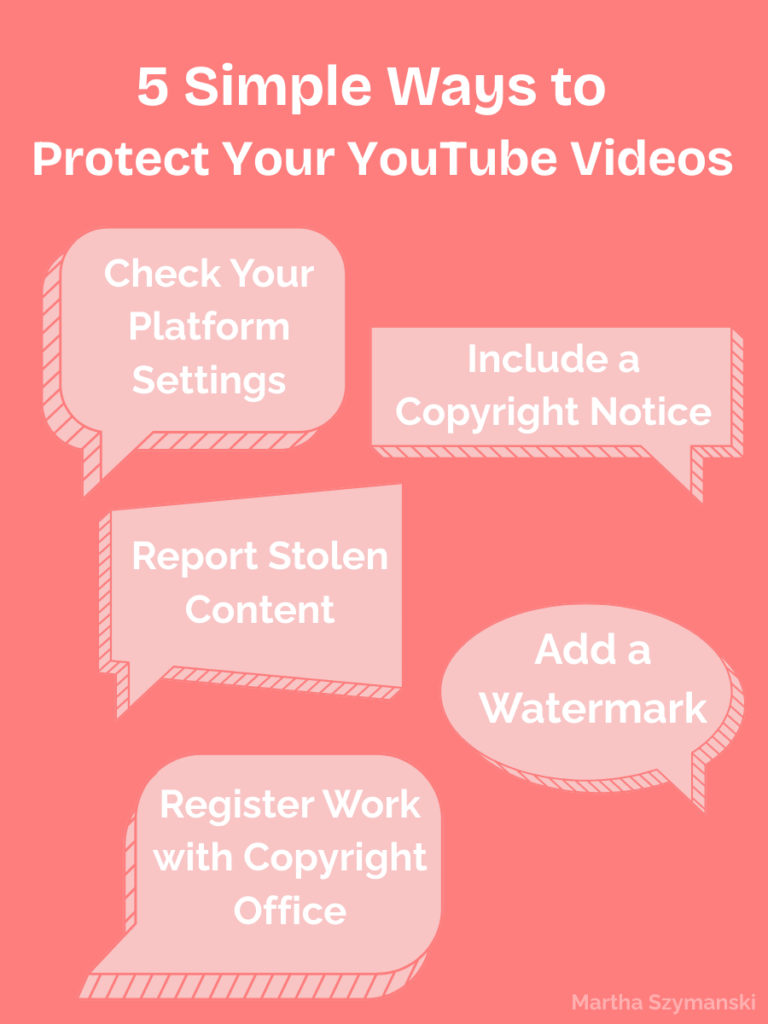
Check Your Settings
One of the easiest and most overlooked steps creators can take is simply checking the settings on their platform.
Many social media platforms already include tools that allow creators to limit how their content can be used. Some platforms allow users to disable downloading or sharing features. Others allow creators to restrict embedding their content on outside websites.
Before uploading videos, it is a good idea to explore the settings section of your account. Many creators skip this step because they are eager to start posting content. However, these settings can add an extra layer of protection.
Some things creators should check include:
• Privacy settings for videos
• Whether downloading is allowed
• Whether embedding videos on outside websites is allowed
• Content ownership settings
• Copyright reporting tools
This step is often the least stressful option since it does not require contacting customer service or filing complaints later. It is a quick way to prevent some misuse before it even begins.
While these settings will not stop every type of content theft, they can reduce the chances of someone easily downloading and reposting your videos.
Implement Watermarks
Another simple but effective method for protecting video content is using watermarks.
A watermark is usually a small symbol, logo, or username placed somewhere on the video. Most creators place watermarks in a corner of the screen so they do not distract viewers but are still visible.
Watermarks serve two important purposes.
First, they help identify the original creator of the content. If someone reposts the video somewhere else, viewers can still see who originally made it.
Second, watermarks make it harder for people to claim the content as their own. If someone steals a video that clearly shows another creator’s logo or username, it becomes much easier to prove that the content belongs to someone else.
Many popular YouTube creators include watermarks throughout their videos for this exact reason. Even if someone downloads the video and uploads it somewhere else, the original creator’s brand is still visible.
Watermarks also help with branding. When viewers repeatedly see the same logo or username in your content, they begin to recognize your brand. This can help grow your audience and direct viewers back to your original channel.
For students or new creators, creating a watermark does not need to be complicated. A simple logo, channel name, or social media handle placed in the corner of the video can make a big difference.
Copyright Notice
Another helpful step creators can take is adding a copyright notice in the description of their video.
A copyright notice is a short statement that explains that the content belongs to the creator and cannot be reused without permission. While this may seem like a small detail, it can help establish ownership of the content.
Many creators place a short message in their description such as:
“Copyright © [Year] [Creator Name]. This video may not be reproduced or distributed without permission.”
Including this notice tells viewers that the content is protected and reminds others that the work belongs to the original creator.
While a copyright notice alone will not stop someone from stealing content, it can strengthen your position if a dispute happens later. It also shows that you take ownership of your work seriously.
For creators trying to build credibility online, small steps like this can make your channel appear more professional as well.
Utilizing Your Copyright Protections
If creators want to take things one step further, they can register their work with the United States Copyright Office.
The Digital Millennium Copyright Act, also known as the DMCA, was passed in 1998. This law helps protect copyrighted work on the internet and allows creators to request that stolen content be removed from websites.
Registering your content with the U.S. Copyright Office creates official documentation that proves you are the owner of the work. This can make it easier to take action if someone reposts your video without permission.
Once your content is registered, you can submit copyright complaints if someone steals your work. Platforms like YouTube are required to follow DMCA guidelines, which means they must review and respond to copyright claims.
However, it is important to understand that registering content can involve filing fees. For creators who produce a large amount of content every week, registering every single video might become expensive.
Because of this, some creators only register their most important videos or content that took a large amount of time and effort to produce.
Even if you do not register every video, understanding how copyright protection works is still valuable for any content creator.
Monitor and Enforce Your Content
Protecting your content also requires paying attention to how your work is being used online.
Sometimes creators discover that their videos have been reposted on other platforms without permission. This could be on another YouTube channel, a TikTok account, or even a different website.
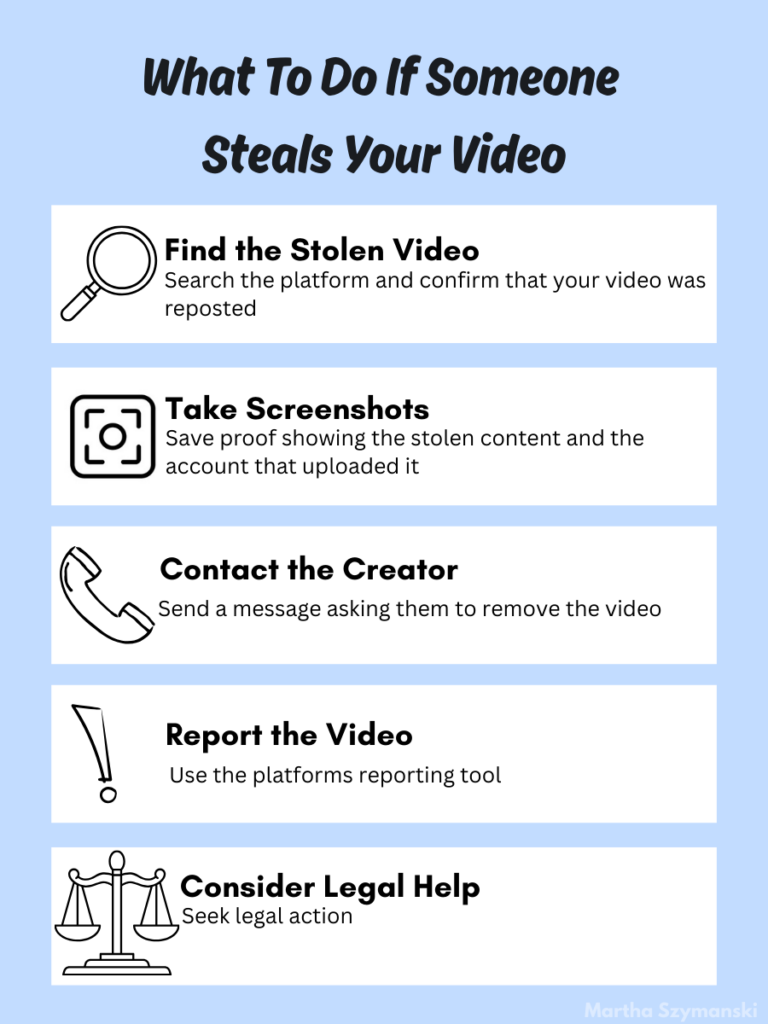
If you discover your content being reused without permission, one option is to contact the person who posted it and ask them to remove it.
In some cases people repost content without realizing they are violating copyright rules. A simple message asking them to take the video down can sometimes solve the problem quickly.
However, this approach does not always work. Some users may ignore requests or refuse to remove the content.
Another challenge is that monitoring your content can take time. Searching for reposted videos, contacting other users, and waiting for responses can take energy away from creating new content.
Because of this, many creators balance monitoring their work with focusing on producing more content. As your audience grows, viewers sometimes help identify stolen videos by reporting them to the original creator.
Copyright Strikes on YouTube
YouTube has a system in place that helps protect creators called the copyright strike system.
When a creator uploads content that uses copyrighted material without permission, the original owner can report the video. If YouTube determines that the claim is valid, the platform may issue a copyright strike to the channel that uploaded the stolen content.
YouTube uses a three-strike system.
If a channel receives three copyright strikes, their account can be permanently removed from the platform.
Because of this policy, many creators are careful about using content that does not belong to them. A single strike can damage a channel’s reputation, and three strikes can end the channel completely.
If your video is reposted without permission, reporting the video through YouTube’s copyright reporting system can lead to the stolen video being removed and the offending channel receiving a strike.
This system helps encourage creators to respect the work of others and helps protect the effort that goes into creating original content.
Important Legal Considerations
While there are several ways to protect content online, it is also important to think carefully about legal action.
Legal fees can be expensive and can add up quickly. For many small creators or students, hiring a lawyer may not always be the most practical option.
Before taking legal action, creators should consider a few questions.
Is the stolen content causing serious financial harm?
Is the situation worth the cost of legal action?
Are there other solutions available through the platform itself?
Often the first step should be working with the platform where the content was posted. Platforms like YouTube already have systems in place for reporting copyright violations and removing stolen content.
Registering content with the Copyright Office can also provide protection without immediately needing legal help.
Understanding your options can help creators make smarter decisions when protecting their work.
Final Comments
Content creation continues to grow as more people share ideas, entertainment, and information online. For college students and young creators, platforms like YouTube provide exciting opportunities to build an audience and develop valuable digital skills.
However, with this growth also comes the challenge of protecting original content.
Taking a few simple steps can make a big difference. Checking platform settings, adding watermarks, including copyright notices, and understanding copyright protections are all ways creators can protect their work.
Monitoring your content and reporting stolen videos, when necessary, also helps keep ownership of your creations.
At the end of the day, creators deserve credit for the time, effort, and creativity they put into their work. Protecting your content is not just about preventing theft. It is about making sure that the work you create continues to belong to you.
For young creators just starting their journey, learning about copyright and digital protection is an important part of building a successful presence online.
It is important to remember that original ideas and authentic creators will always stand out.