The Prospecting Detective: How Businesses Turn Suspects Into Real Customers
By Ronak Gupta
UIUC Senior studying Finance and Marketing with a profound interest in Entrepreneurship
Opening the Case: Why Finding Customers Is Harder Than It Looks
When most people think about sales, they imagine a salesperson trying to convince someone to buy something. But in reality, the hardest part of sales is not convincing people. The hardest part is finding the right people to talk to in the first place.
Think of sales like detective work. A detective does not randomly arrest people hoping one of them is guilty. Instead, they investigate clues, narrow down suspects, and focus on the individuals most likely connected to the case. Sales works the same way. Businesses need to identify the people who are most likely to benefit from their product and who actually have the ability to purchase it.
This is where the concept of prospecting comes in. Prospecting is the process of identifying potential customers and determining whether they are worth pursuing as buyers. According to Salesforce, prospecting is the first step in the sales process and involves researching potential customers, identifying needs, and determining whether a lead is a good fit for a company’s product or service.
The key point is that not all people are actually potential customers for your business. There are some people who may show interest in your product, but that does not mean to say that they actually have the ability to buy your product. Businesses therefore need to separate casual interest from real buying potential.
Understanding how to do this effectively can make the difference between a struggling sales strategy and a successful one. Just like detectives focus their attention on the strongest leads in a case, successful businesses should focus their time and energy on prospects who are most likely to become customers.
Investigate Before You Interrogate: Research First
If there’s one thing detective shows have taught us, it’s that you don’t walk into an interrogation without doing your homework first. The same rule applies in sales.
Before reaching out to a potential prospect, it helps to do some research. This gives you a better idea of who the person is, what their business does, and whether your product might actually help them. Otherwise, you’re basically just guessing.
A lot of businesses start this process by looking at their past customers. If certain types of people or companies have already bought the product before, chances are there are other similar customers out there who might also be interested.
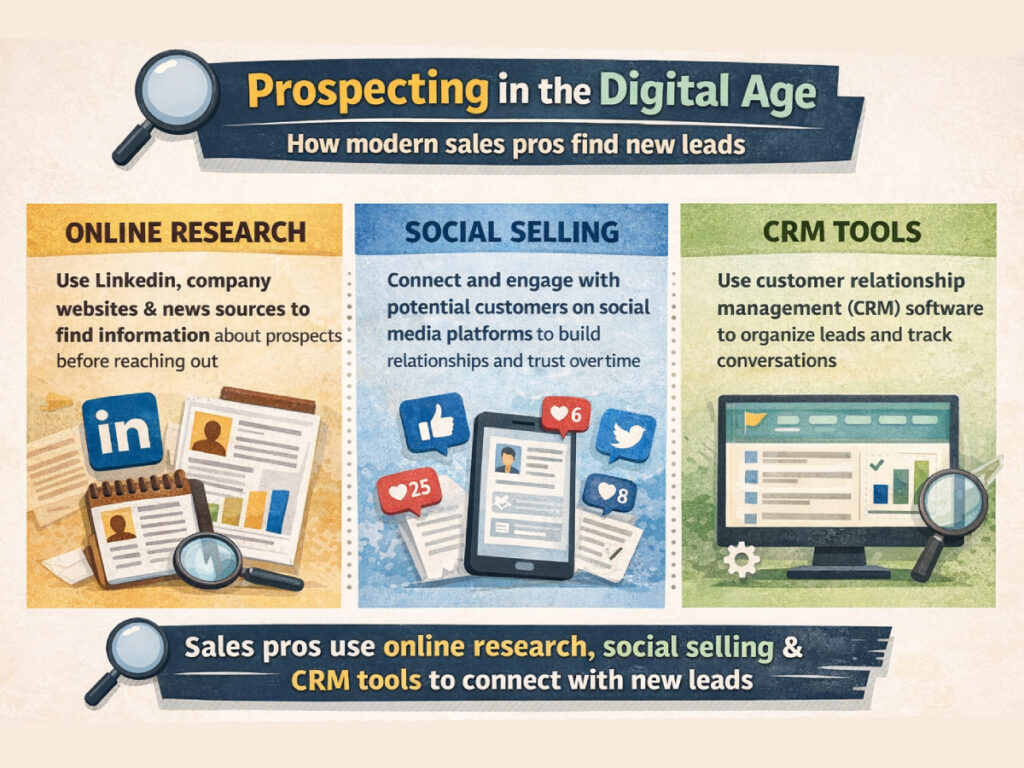
Sales teams also use tools like LinkedIn to learn more about potential prospects. You can quickly see someone’s job role, the company they work for, and sometimes even what projects they’re involved in. It’s basically like modern-day detective work, except instead of fingerprints and crime scenes you’re scrolling through profiles and company pages.
Research might seem like extra work at first, but it saves a lot of time in the long run. Instead of randomly reaching out to people who might not care, you’re focusing on the leads that actually make sense. Think of it as narrowing down your suspects before you start questioning everyone in the neighborhood.
Not Every Suspect Is Guilty: Identifying Real Customers
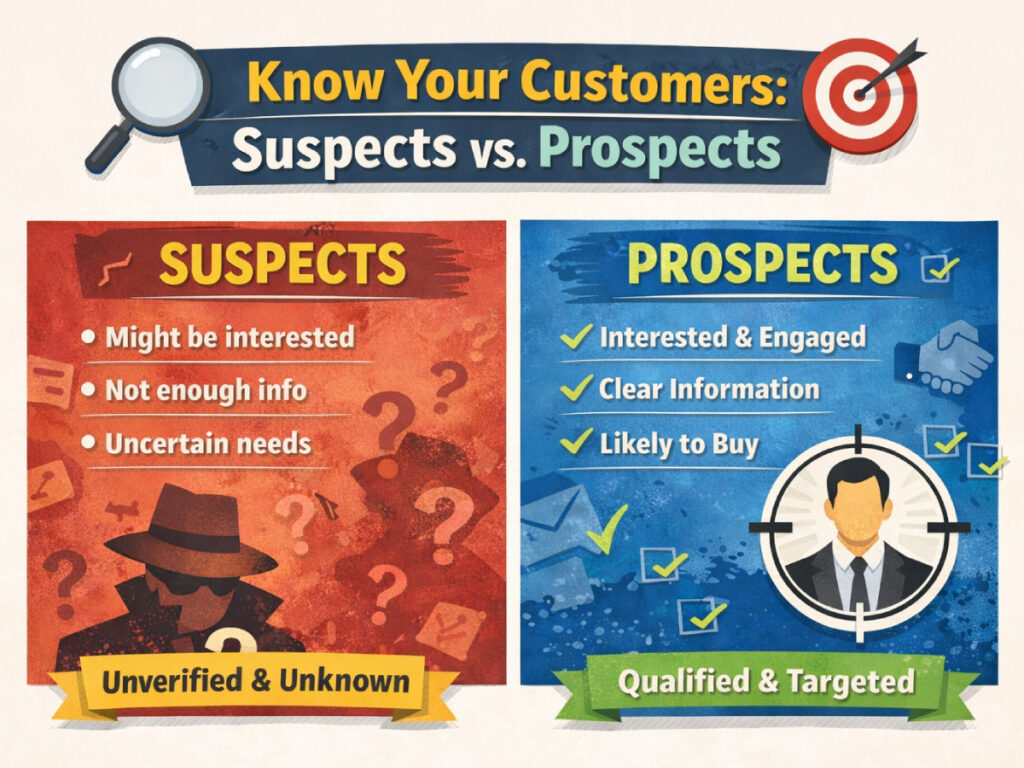
One of the most important things in sales is truly understanding the difference between a suspect and a prospect.
A suspect is someone who may be interested in your product. The suspect may look like your average customer, but you are not really sure if he or she has the authority or means to buy your product.
A prospect, on the other hand, is someone who actually has the authority to make purchasing decisions and has enough money to spend on your product. Therefore, simply put, a prospect is a real potential customer.
A big mistake a lot of businesses make is treating suspects and prospects like they’re the same thing. They end up spending time pitching their product to people who were never really serious buyers in the first place. When that happens, a lot of time and energy gets wasted that could have been spent talking to people who actually might buy. In sales, time is valuable, so focusing on the right people makes a huge difference.
To avoid this problem, many sales teams use simple frameworks to figure out whether someone is actually worth pursuing as a customer. One of the most common ones is called BANT, which stands for Budget, Authority, Need, and Timeline. The idea is pretty straightforward. Before you spend a lot of effort trying to sell something, you want to ask a few basic questions about the potential buyer.
- Does the customer have money to buy the product?
- Do they actually have the authority to make the purchase, or would someone else need to approve it? (The classic “don’t tell mom I asked you first.”)
- Do they actually need the product, or are you trying to sell ice to someone who already owns a freezer?
- Does the customer have an idea of when they’d realistically make the purchase?
If the answer to most of those questions is yes, then you’re probably dealing with a real prospect instead of just a suspect. Using a system like this helps businesses focus their attention on the people who are likely to buy, instead of chasing every possible lead. In the long run, that makes sales efforts way more efficient and increases the chances of closing deals.
Start With Known Associates: The People Who Already Trust You
When businesses start looking for customers, one of the easiest places to begin is with people they already know. It might sound obvious, but it works for a reason.
Friends, family, and existing customers are often the first pool of potential customers because there is already a certain degree of trust involved. And trust is a huge factor in buying anything, especially for a new business or salesperson.
That’s why many entrepreneurs start by selling to people in their own network. If you started a business tomorrow, chances are the first people hearing about it would be your friends or family. They might try your product, support you, and give honest feedback, which can be really helpful.
Existing customers are often the best pool of people to approach as well. They are already familiar with your product and have benefited from it in the past, so they are more likely to buy from you or spread the word for you. Let’s be honest, nothing beats a referral from a friend! In fact, studies have shown that people are more likely to buy from a brand they trust and refer others to it as well.
For this reason, many businesses focus on ensuring their current customers are happy with the product and the business as a whole. In fact, a happy customer is one of the strongest forms of marketing a business can have.
The Inside Informant: Why Referrals Are So Powerful
In detective movies, investigators always seem to have that one person who gives them inside information. Maybe it’s a witness, maybe it’s an informant, but somehow, they always know someone who knows someone. In business, referrals work pretty much the same way.
A referral happens when one of your existing customers introduces you to someone else who might be interested in your product. And honestly, this is one of the best ways to find new prospects because you’re not starting the conversation from zero. There’s already a little bit of trust built in.
Think about it from a normal person’s perspective. If a random salesperson messages you online trying to sell something, you’re probably ignoring it. But if your friend says, “Hey, I actually tried this product and it’s pretty good,” you’re way more likely to at least hear them out. According to research, over 90 percent of consumers trust recommendations from people they know more than any other type of advertising. So, referrals aren’t just helpful, they’re extremely powerful.
Referrals also solve one of the biggest problems in sales: cold outreach. Cold calls and cold emails can feel a lot like knocking on random doors hoping someone answers. Sometimes it works out, but most of the time it doesn’t. A referral is different because now you’re not just some random person trying to make a sale.
One small trick is asking for referrals one name at a time. If you ask someone to list ten people who might want your product, their brain basically freezes. It’s kind of like when a teacher asks, “What are your five favorite movies of all time?” and suddenly you forget every movie you’ve ever seen.
But if you ask for one name, then another, then another, it becomes way easier. Before you know it, you’ve built a solid list of potential prospects. In detective terms, you’re slowly building your list of “suspects”… except in this case you want all of them to be guilty of needing your product.
Building Trust with the Witness: The Psychology of Sales
At the center of every successful sale is one simple thing: trust.
People rarely buy something from someone they don’t trust, especially if the purchase involves a lot of money or long-term commitment. Imagine walking into a store and immediately feeling like the salesperson is trying way too hard to push something on you. Most people’s first instinct in that situation is to walk away.
That’s why building relationships is such an important part of sales. The best salespeople don’t just jump straight into a pitch. Instead, they ask questions and try to understand the customer’s situation first.
This approach is often called consultative selling. In simple terms, it means acting more like an advisor than a salesperson. Instead of saying, “Here’s our product, buy it,” the salesperson tries to understand the problem and then suggests a solution.
In detective terms, think of it like interviewing a witness. If you walk in acting aggressive and impatient, they probably won’t tell you much. But if you build rapport and actually listen, they’re much more likely to cooperate.
The same thing happens in sales. When customers feel like you genuinely care about helping them, they’re much more open to hearing what you have to offer.
Don’t Let the Trail Go Cold: Why Timing Matters
Another important thing to understand about sales is that timing can make a huge difference.
If someone gives you a referral or shows interest in your product, you don’t want to wait too long before following up. Opportunities can disappear surprisingly quickly if you let them sit for too long.
Think about it in everyday terms. If you meet someone and they give you their number, you probably expect them to reach out fairly soon. If they suddenly text you three weeks later, your first reaction is probably something like, “Wait… who is this again?”
The same thing happens in business. If someone tells their friend about your product and says you might reach out, that introduction is fresh in their mind. But if you wait too long, the connection starts to fade and the excitement disappears.
Following up quickly also shows professionalism. It signals that you’re organized, serious, and respectful of the opportunity. Those little details might seem small, but they can shape how people perceive you and your business.
From a detective perspective, it’s the same idea. When investigators get a lead, they follow it right away. If they wait too long, witnesses forget things, people move on, and the trail goes cold.
The same thing can happen in sales if you wait too long to follow up. Don’t let your prospects forget you!
Modern Surveillance: Prospecting in the Digital Age
Prospecting today looks very different from how it did a few decades ago.
In the past, many salespeople relied heavily on cold calls or even going door-to-door trying to find potential customers. While those methods still exist, a lot of prospecting now happens online.
Platforms like LinkedIn have become major tools for professional networking and prospecting. Sales professionals can research companies, learn about decision-makers, and even see what kind of projects or industries someone is involved in before ever starting a conversation.
Another tool businesses rely on today is CRM software, which stands for Customer Relationship Management systems. These systems help companies track conversations with prospects, organize leads, and keep track of where each potential customer is in the sales process.
You can almost think of it like a detective’s investigation board. Instead of photos and red strings connecting suspects, sales teams have dashboards, spreadsheets, and databases tracking potential customers.
Technology has definitely changed the way businesses find prospects, but the goal is still the same. Whether it’s through LinkedIn messages or old-school networking events, the real objective is identifying the right people and building genuine relationships with them.
The tools might look more modern now, but the core idea is still classic detective work: follow the clues and connect the dots.
Rookie Detectives: Lessons for Students and Young Professionals
Even though prospecting is often associated with sales careers, the skills behind it are actually useful in many other parts of life.
Students and young professionals use prospecting all the time without even realizing it. Networking for internships, reaching out to recruiters, and building professional connections are all forms of prospecting.
For example, when students attend career fairs, they’re essentially prospecting for potential employers. They research companies ahead of time, identify people they want to talk to, and start conversations that could eventually lead to internships or job opportunities.
The same basic strategies apply here too. Preparation helps a lot, research makes conversations smoother, and showing genuine interest in people goes a long way.
In a way, early career networking is like being a rookie detective. At first, you’re figuring things out as you go, trying to understand how conversations work and how to approach people. But the more you practice, the easier it becomes.
Eventually you start recognizing patterns, asking better questions, and building stronger connections.
And just like in detective work, sometimes the smallest conversation can end up leading to the biggest opportunity.

Closing the Case: Turning Suspects Into Customers
At the end of the day, prospecting is really about finding the right people and building genuine connections with them. Businesses can’t grow without new customers, which is why so much effort goes into identifying strong prospects instead of wasting time chasing every possible lead.
Understanding the difference between suspects and prospects, building trust with customers, asking for referrals, and following up at the right time all play a huge role in turning interest into actual sales.
When you put all of those pieces together, the process starts to feel a lot like detective work. You gather clues, connect the dots, and slowly narrow things down until you find the people who truly need what you’re offering.
And when a prospect finally becomes a customer, it feels a bit like solving a case — everything comes together because you took the time to follow the right leads. Case Solved!