How Businesses Should Respond To Crisis- A Guide For Entrepreneurs & Businesses
Ishan Rajan is a marketing student at the University of Illinois interested in digital marketing, brand strategy, and consumer behavior.
Blog is based on:
Why Crisis Management Is More Important Than Ever
In today’s digital world, crises can spread faster than ever before. A single negative review, viral post, or a bad customer experience can reach millions of people within hours. This speed can damage the long-term reputation of a business. So, it is important to respond quickly and effectively. In today’s world we no longer have the luxury of slowly responding to problems. Instead, companies must be prepared to act quickly and the best way to do it is through social media.
Social media has significantly changed how crises develop and how companies respond to them. In the past, a negative customer experience might only affect a small group of people, but now a dissatisfied customer can post their experience online and the impact of that post can reach a much larger audience almost instantly. When this happens, the company’s response becomes just as visible as the original problem.
Because of this increased visibility, businesses must treat communication as one of the most important tools in crisis management. Customers want to see that a company is aware of the issue, understands their concerns, and is actively working toward a solution. When businesses respond quickly and transparently, they demonstrate responsibility and professionalism, which can prevent small issues from becoming larger reputational problems.
How Crisis Management Saves Businesses
At some point, almost every business will face a crisis. So, it is important that we are ready for one. A crisis can come in many ways. It can arise from product failure, negative feedback from customers, controversy, or a marketing campaign that does not resonate with our intended audiences.
These crises are worse in our modern world because they spread faster through social media. A simple negative review or biased viral post can damage the reputation of our brand within hours. But just as social media adds fire to crises it can also be a great way to put them out. If companies use social media effectively and prepare for problems rather than reacting to a situation once it has escalated, they can strengthen the relationship between the company and its customers.
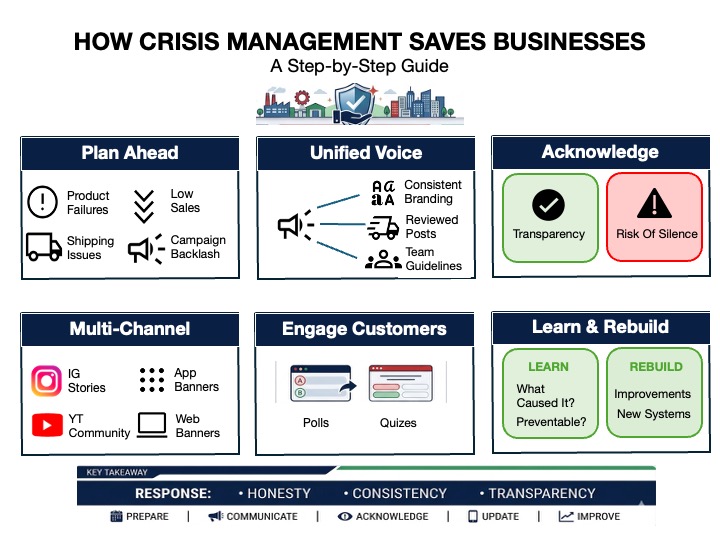
The purpose of this blog will be to explore strategies businesses can incorporate to better prepare for and respond to crises effectively. Some strategies include planning ahead, maintaining a unified voice, communicating transparently, and keeping customers informed throughout the process.
Planning for a Crisis Before It Happens
The best way to get out of a crisis is to acknowledge that a crisis will happen and then prepare for them. Instead of reacting to the problems, companies should regularly prepare for potential challenges and outcomes.
One helpful strategy could be to hold weekly meetings that focus on potential outcomes for the upcoming days. These meetings will allow the teams to think through possible situations and discuss if anything goes wrong how they will handle it.
Some examples of situations where businesses might have to adapt are:
- What happens if a new product launch is successful and demand exceeds supply?
- What if the product launch is not successful and sales are lower than expected?
- What if there are problems with shipment that degrade the quality of our products?
- How should we respond if our marketing campaign fails to reach the intended audience?
- What should we do if the campaign reaches the audience but receives negative feedback?
The situations you must think of can be from positive and negative outcomes. Even through positive outcomes there are possibilities of crises. So, it is important for these companies to create a roadmap for how to respond quickly and effectively. Companies need to make sure they have scripts, posts, and compensations ready on social media to deal with certain crises. This type of proactive planning is especially important for startups and new businesses that may not have a crisis management system in place.
Read: Common Mistakes Business Make on Twitter/X & How to Trend on X Instead
Maintaining a Unified Voice
Social media is key for businesses in crisis management. When companies use effective social media communication, customers will feel more reassured and maintain trust in your brand. However, if done poorly it can also be a major source of confusion during a crisis. To avoid this problem, it is important that companies have a single unified voice.
A unified voice means that all social media channels relay the same tone, message, brand, and identity. This includes things such as visual style, messages of your stories and posts, and the type of content you are involved in. In a crisis you need to make sure that the message is given in the fastest way possible. For example, on Instagram this could be done through the story feature and on YouTube this can be done through posts. This way you customers are informed in the quickest way possible for any crisis.
There are several steps businesses can take to maintain a consistent voice. First, consistent branding is crucial. This means all posts should have the same style, colors, fonts, and overall aesthetic. The content should be associated with one brand. There also needs to be a system in place where posts are reviewed by a social media team or manager before being published. This will help ensure the message and content are aligned with the company. Teams responsible for social media should have clear guidelines for tone, messaging, and responses to customer feedback. This will help in maintaining a unified voice, which is especially important during a crisis because mixed messaging can only make situations worse and damage customer trust.
Acknowledging the Crisis Instead of Ignoring It
It is important for a business to not only acknowledge that there is a crisis but also show that they are aware of the problem and are dealing with it. If businesses ignore crises or delay in responding to them, customers often will assume that the company does not care or is trying to hide an issue. This can lead to even more negative press.
So, it is important that a company’s social media is ready to address the crisis quickly and effectively. They can do this by acknowledging that the problem exists on all platforms, explain what the company is doing to fix it, and constantly provide updates on progress. So, when customers see that a company is taking responsibility and is actively working on a solution, they are more likely to remain loyal to the brand.
Using Company Website and Apps to Communicate Updates
During a crisis customers want reliable and timely information. Social media is a good way to help spread updates, but businesses could also incorporate the use of official communication channels such as their website or mobile app.
This would be a great way for businesses to stay connected with its customers and provide more personalized communication, further strengthening brand loyalty and reputation. On these official channels they could provide daily updates, explain how the company is working to solve the problem, and give estimated timelines for the issue.
Customers appreciate knowing what is happening behind the scenes. Even if the problem cannot be solved immediately, regular updates show that the company is actively working toward a solution.
Read: How to Turn Suspects into Prospects: Sales Training Done Right
Keeping Customers Engaged Through Social Media
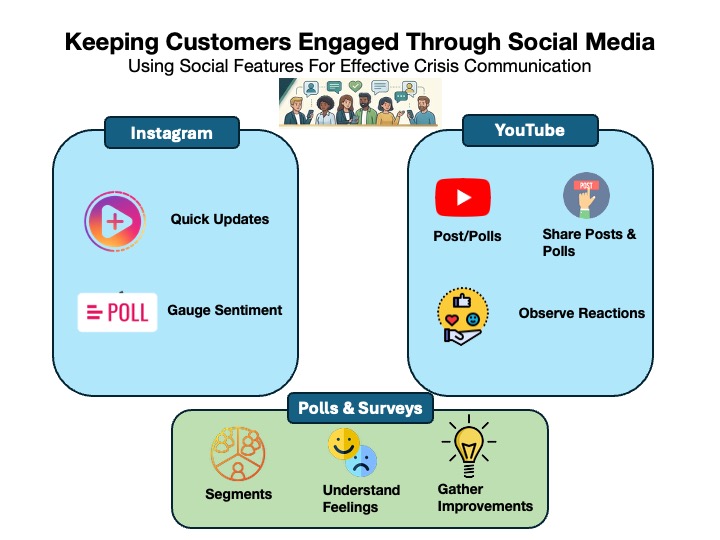
There are several features that can help businesses to communicate effectively during a crisis.
Instagram stories are a great way for businesses to share quick updates and reminders that customers can easily view through the day. You can also use Instagram quizzes or polls to gauge where your audience is.
YouTube’s community tab allows businesses to share updates, polls, and announcements with their audience. This can be really useful for gauging customer reactions and understanding changing needs.
It is also important to use polls and surveys across various platforms to reach the different customer segments. With these polls and surveys companies can better understand how the customers feel about situations and what improvements they can expect. By using these tools, businesses can maintain open communication with their audience and show that they value customer input.
The Role of Leadership During a Crisis
While communication strategies and marketing plans are important during a crisis, leadership is an important aspect that ensures the process runs smoothly and the company actually evolves from the crisis. Leaders set the tone for how the organization reacts and how seriously the issue is handled.
Strong leadership during a crisis involves staying calm, gathering accurate information, and making decisions that will positively impact the entire company. When leaders respond in a clear and structured way, it helps the entire organization stay focused on solving the problem rather than panicking.
Leaders must also ensure that teams across the organization are aligned. This means that marketing, customer service, public relations, and operations should all be aware of the entire situation and what the plan is for each team. When departments communicate with each other effectively, businesses can respond faster and present a unified approach to customers.
Another important aspect of leadership during a crisis is accountability. When leaders acknowledge mistakes and show a commitment to improving, customers are far more likely to respect the company and continue supporting the brand in the future.

Learning From the Crisis
After the crisis has been resolved, it is important to take the next necessary steps to ensure the brand and reputation of the company stays positive.
Businesses first steps should be to get together with a team and analyze what happened and identify improvements in the system to prevent similar problems from arising.
Some key questions companies can discuss would be:
- What caused the crisis?
- Could the problem have been prevented?
- Did our communication strategy work effectively?
- How did customers respond to our actions?
Once the company has reviewed these questions, they can make internal changes and create more efficient crisis response strategies. This can help the company shift towards building a more positive reputation with its customers.
Rebuilding Customer Trust After the Crisis
Finally, businesses must focus on rebuilding customer trust once the issue has been resolved.
An effective way to do this is by acknowledging the inconvenience customers experienced and offering compensation when appropriate. For example, a restaurant experiencing service issues might offer customers a discount on their next meal, a free item or promotion, and loyalty rewards or coupons. These gestures demonstrate appreciation for the customer’s patience and reinforce the relationship between the business and its audience. More importantly, businesses should communicate their commitment to preventing the issue from happening again. Customers are often willing to forgive mistakes if they believe the company genuinely cares about improving.
What Young Entrepreneurs Can Learn From Crisis Management
For college students, startups, and young entrepreneurs, crisis management is an essential skill. Even small businesses or personal brands can face challenges such as negative reviews, product issues, or social media criticism. Learning how to respond calmly and strategically can make the difference between losing customers and strengthening brand loyalty.
Some key lessons to keep in mind are:
- Prepare for potential challenges before they occur.
- Communicate clearly and consistently with your audience.
- Address problems honestly instead of ignoring them.
- Use digital platforms to keep customers informed.
- Learn from mistakes and improve future strategies
Businesses that handle crises effectively often emerge stronger and more trusted than before.
Examples of Businesses Successfully Managing Crises
There are many real-world examples of companies that faced serious crises but were able to recover through effective communication and learning.
One example is the restaurant chain Chipotle. Several years ago, Chipotle experienced a major food safety crisis that caused many customers to lose trust in the brand. Instead of ignoring the issue, the company publicly addressed the problem, implemented stricter food safety procedures, and communicated the changes to customers through marketing campaigns and social media updates. Over time, these actions helped rebuild customer trust and allowed the company to recover.
Another example can be seen with companies that experience product failures or service disruptions. Airlines often face operational challenges that lead to delays or cancellations. When these companies communicate clearly with customers, provide updates, and offer compensation, when necessary, they are more likely to maintain customer loyalty even during difficult situations.
These examples demonstrate that while crises are often unavoidable, businesses that communicate honestly and take responsibility are better positioned to recover and maintain strong relationships with their customers.
Conclusion
To run a business is to accept that crises are inevitable. It is more important that the company responds to these crises effectively through good communication and use of social media.
By planning ahead, maintaining a unified social media voice, communicating transparently, and keeping customers informed throughout the process, businesses can navigate crises more effectively.
In a world where information spreads instantly, companies that prioritize honesty, consistency, and customer engagement are far more likely to maintain trust and long-term success.
For young entrepreneurs and business students, understanding these principles early can provide a significant advantage when building and managing future businesses.