How YouTubers Actually Make Money: 20 Real Revenue Streams Behind the Creator Economy
By Lauren Meyer
Lauren is a marketing student interested in social media strategy and the creator economy.
Video Source: How Influencers Actually Make Money
From Views to Millions: YouTubers Can Make Big Money
Celebrity YouTube creators often flash expensive clothes, cars, and homes, making aspiring content creators believe that hosting a YouTube channel can generate an endless revenue stream. According to Forbes Magazine, some creators such as Mr. Beast bring in a staggering $85 million per year, but many successful YouTube creators generate more modest incomes.
While scrolling through YouTube, one of the biggest complaints of viewers is the constant ads that disrupt videos or require viewers to watch an ad before the video even begins. When most people think about YouTube income, they picture one thing: ads playing before videos. While ads are certainly part of the equation, they are far from the full story. Successful creators rarely rely on a single income source. Instead, they build multiple revenue streams, much like traditional businesses do.
Content creators invest time and money into making videos. They must purchase specialized equipment, including cameras, editing software, and production equipment. They spend countless hours producing and editing content that viewers enjoy for free. Why? Because content creators know the potential to bring in substantial incomes. According to Coherent Market Insights, the global creator content economy was over $202 billion in 2025, and it is expected to grow to over $848 billion by 2032.
YouTubers see this potential and know that they want to be a part of this growing market. To grow and sustain their own content creator business, they need strategies to generate income if they want to keep producing videos consistently.
In a video from Walters World, creator Mark Wolters explains 20 different ways YouTubers generate revenue. These methods range from advertising to selling books and merchandise, offering courses, and even speaking at conferences. Understanding these strategies helps viewers better understand the creator economy and also provides valuable insights for anyone considering becoming a content creator. For college students interested in marketing, entrepreneurship, or digital media, YouTube offers great advice for generating income as a YouTuber. There are many strategies for generating income as a content creator, with some being more simplistic and others requiring complex, long-term partnerships.
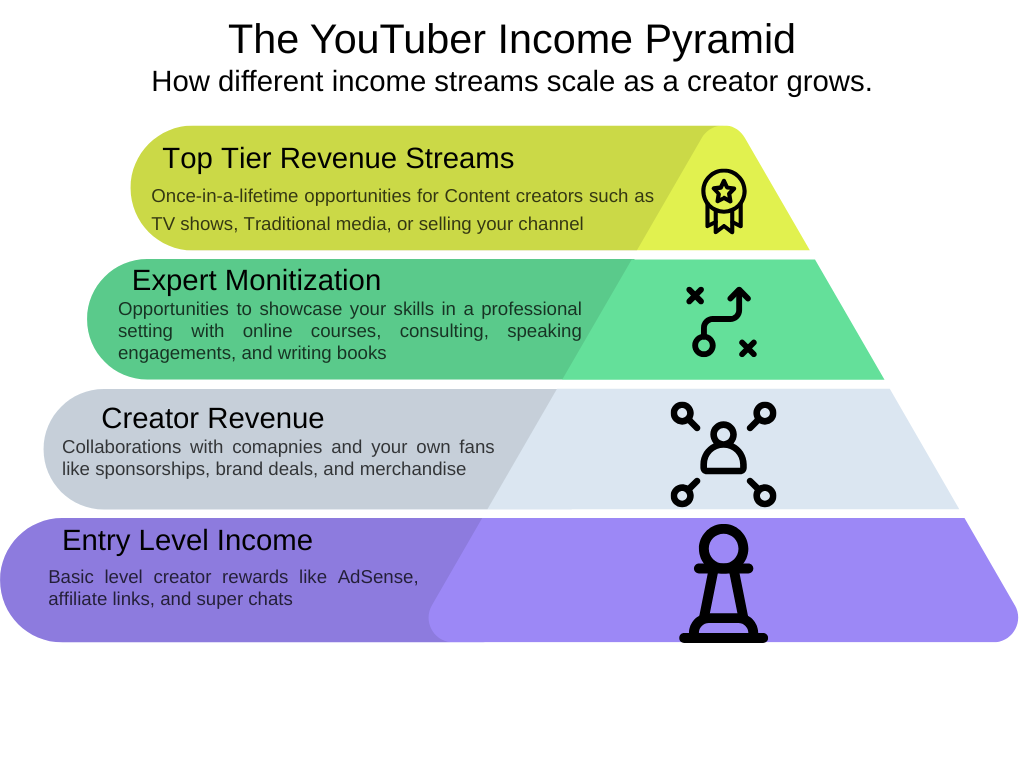
Here are the major ways YouTubers actually make money.
1. YouTube Ad Revenue (AdSense)
The most widely known income source for YouTubers is YouTube AdSense, which allows creators to earn money from advertisements placed on their videos.
These ads can appear in several formats:
- Ads before a video begins
- Ads during longer videos
- Ads after a video ends
- Banner ads on the page
To get paid for ads through AdSense, creators and their channel must meet certain minimum requirements:
- 1,000 subscribers
- 4,000 watch hours within 12 months
- Follow YouTube guidelines
Video creators receive a portion of advertising revenue through AdSense. Even though it seems that these ads would bring in large amounts of revenue, YouTube keeps a large portion of the ad revenue. The billionaire content creators are not earning their fortunes from ad revenue. Because ad revenue alone is unpredictable, most creators look to other income streams to increase their earnings.
2. Brand Deals
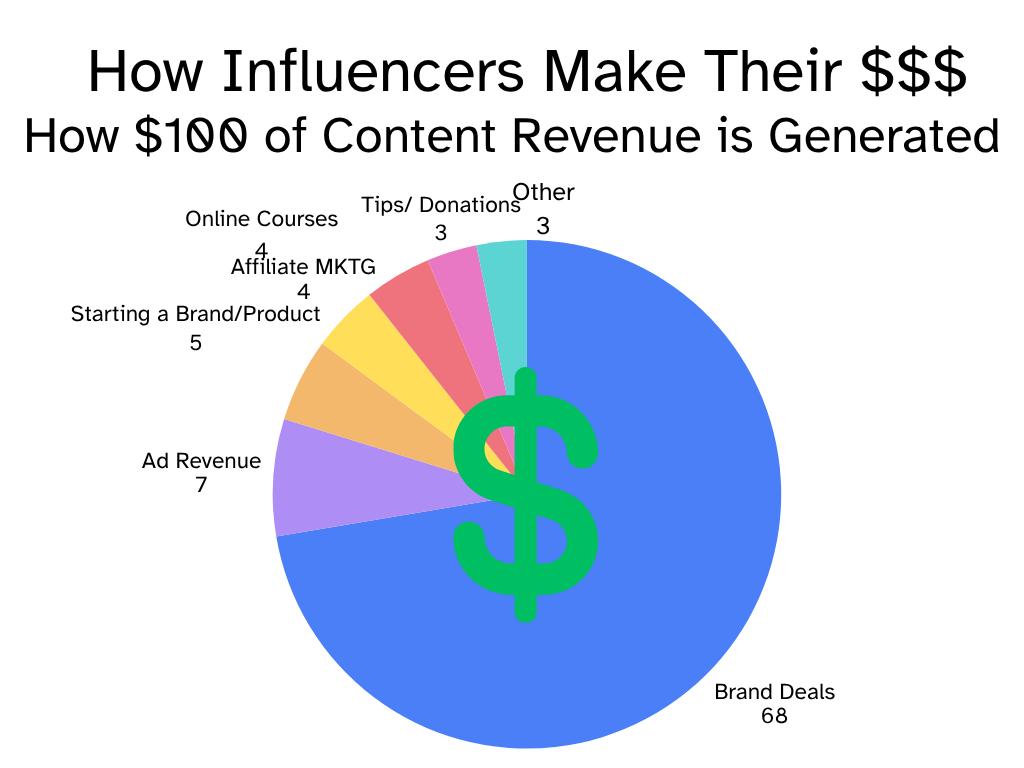
A brand deal occurs when a company pays a creator to show or promote a product or service within a video. Brand deals are one of the most lucrative income sources for many YouTubers. A 2023 report from Goldman Sachs revealed the importance of brand deals to YouTube creators with “nearly seven in 10 creators citing brand deals as their primary income stream.”
There are many ways that a brand deal can be secured, but these are usually short-term relationships between the company and the YouTube creator. The creator will generate 2 to 3 videos that show the influencer using the product or mentioning the product, but these brand deals are not considered long-term sponsorship arrangements.
Brand deals can include:
- Mentioning the product or service before or during the video
- Demonstrating how to use a product
- Featuring the product in a tutorial or lesson
For example, a beauty YouTuber may promote shampoo or skincare products, a travel creator could partner with luggage or backpack brands, or a musician could form a brand deal with a guitar manufacturer.
Successful brand deals depend on audience alignment. It is important for the creator to make sure that the company and its brand fit with the audience that will be interested in the videos. If the company and its product fits with the channel’s theme and audience interests, viewers are more likely to notice the product and respond more favorably.
It is important for all sponsored content to be mentioned as “sponsored content” so that viewer understand the creator is being paid to promote the product. This is important for the creator to maintain transparency and establish credibility with viewers.
3. Sponsorships
With sponsorship agreements, companies pay support the creator’s content financially in exchange for brand visibility. While brand deals usually apply to just a few videos, sponsorships are typically longer-term partnerships and include many more videos.
A sponsorship may last:
- Several months or an entire year
- Throughout a multi-video campaign
Unlike brand deals, sponsorships may not always include the product or service in the video. Instead, the creator might just include the company’s logo or name at the bottom of the video, or the creator could just mention the company name as a sponsor during the video. Sponsored products are not always shown, used, or reviewed during a sponsored video. Similar to brand deals, the creator needs to ensure that the sponsor’s company aligns with the creator’s theme so that the audience will be receptive to the sponsor and their products.
Because this type of partnership is long-term, it can provide more stable income. This steady income stream is important to the long-term growth of content creators channels. According to the blog How Much Do Sponsors Pay YouTubers? A Guide to Rates and Insights, YouTube channels with less than 10,000 subscribers can earn between $50 and $300 per sponsored video, but YouTube channels with 100,000 or more subscribers can earn between $2,000 and $50,000 for an individual sponsored video.
4. Blogging and Websites
It is important for content creators to market their channels to attract more viewers or subscribers. Many YouTubers expand beyond video and create blogs or personal websites. Creators add links to their videos in the blogs. This strategy can also be sued to drive viewers to a content creator’s website.
Blogs or websites are useful for creators to:
- Embed their videos
- Write articles expanding on video topics
- Attract search engine traffic
- Generate more advertisements and ad revenue
Website ads typically come from platforms such as Google Ads which can also add a small revenue stream. Although blog revenue may not be large, blogs help creators build a broader digital presence and grow their audience.
5. Affiliate Marketing
Affiliate marketing is a strategy used by creators to generate additional revenue by helping to promote sales of an advertiser’s products or services. YouTubers put special tracking links in their videos at the bottom to encourage viewers to click on the link and buy products. The ads are in the descriptions of the links. When viewers click those links and purchase a product, the creator receives a commission. For channels with a large number of subscribers or viewers, even a small percentage of clicks can lead to substantial revenue. According to the blog Creator Economy Statistics and Facts for 2025-26, “Commission rates can range from 5% to 50% per sale,” but the reward for content creators can be as little as 1 – 3% of the sale price. As with other types of sponsored ads, the content creator needs to make sure that the affiliate offers products that fit with the channel’s theme and audience.
A common example is the Amazon Associates program, where creators earn a small percentage from purchases made through their links.
Affiliate links are frequently used for:
- Camera equipment
- Tech gear
- Books
- Travel services
- Online tools
6. Crowdfunding and Memberships
Some creators rely on their viewers directly for financial support. They simply ask their viewers to make donations or to join and become a member of the channel. According to blogger Emenike Emmanuel, “Platforms like Patreon, Buy Me a Coffee, and Ko-fi allow YouTubers to earn donations or monthly support.” The donors or subscribers can receive small incentives such as stickers or small themed merchandise items. Memberships can create stronger relationships between the content creator and the members while helping fund new content. If members share details about their membership on their own social media platforms, new viewers or members can be found.
Donors can also receive other incentives or for perks like:
- Exclusive videos
- Early access to content
- Members-only live streams
- Special community chats
- Faster responses to questions or emails
Membership subscriptions can generate additional monthly income. Even a simple $5 per month subscription for a channel with 200 subscribers can bring in an additional $1,000 per month.
7. Selling Merchandise
Merchandise is another common income source. Creators often sell branded items such as:
- T-shirts
- Stickers
- Water bottles
- Hats
For large channels, merchandise can generate significant revenue while also strengthening the channel’s brand. According to Emenike Emmanuel in the blog How Freelancers, YouTubers, and Podcasters Monetize Beyond Ads, “Platforms like Printful or Shopify integrate directly with YouTube, making fulfillment simple. Moreover, merchandise helps creators build identity.” Print-on-demand services make it relatively easy for creators to design and sell products without managing inventory. It is important for creators to find merchandise that enhances their brand and their brand identity. Although all creators can offer t-shirts with their channel logo and name, other merchandise can help to build a sense of community among viewers. Emmanuel shares some other examples:
- A fitness YouTuber sells resistance bands
- An excellent cooking creator sells branded utensils
- A gaming creator sells themed desk accessories
8. Posting Videos on Other Platforms
YouTube isn’t the only video platform that attracts viewers. Creators can create videos for their regular channel and then upload their content to additional platforms:
- TikTok
- Vimeo
- Dailymotion
While these platforms may not generate as much traffic as YouTube, they can still create additional income streams and reach new audiences. Depending on where the video creators audience may live, other platforms may be more popular than YouTube and generate more views.
9. Speaking Engagements
Successful YouTubers sometimes receive invitations to speak at:
- Universities
- Conferences
- Corporate events
These speaking engagements often include appearance fees and travel compensation. Beyond the income, speaking events also help creators expand their networks, build credibility and grow their public image.
10. Conference Appearances
Similar to speaking engagements, conferences provide opportunities for creators to share expertise and connect with new audiences. Conferences draw attendees from all over the world. People in the audience would learn about the content creator and get exposed to the creator’s channel and knowledge.
Conferences can help a YouTube creator grow their channel through:
- Business partnerships
- Media exposure
- Additional speaking opportunities
11. Writing Books or E-books
Many creators are experts in their topic and can turn their knowledge into revenue by writing and selling books about their subject. Books allow YouTubers to organize their experience into more detailed stories and information than short videos.
Popular types of creator books include:
- Educational guides
- Personal stories
- Industry advice
- Skill-building manuals
Books can be sold through traditional publishers or self-publishing platforms like Amazon.
12. Selling Worksheets or Educational Materials
Some creators go beyond books and offer downloadable materials such as:
- Workbooks
- Study guides
- Practice worksheets
Educational creators often use this model to support students who want structured learning materials. Helping people learn their topic can also help to increase the creator’s viewers and subscribers.
13. Private Consulting
Experienced creators may offer one-on-one consulting services. For example, a successful YouTuber might provide advice on:
- Content strategy
- Video production
- branding
Consulting allows creators to use their expertise to earn consulting fees while helping others succeed.
14. Online Courses and Masterclasses
Content creators sometimes create thousands of videos and become experts in their topic. Another way to generate income is to sell the creator’s expertise by creating an online course or masterclass. A masterclass is a specialized class that is taught by an expert in their field. The content creator is the expert who creates and teaches the class. Content creators can sell their online classes and extra materials to increase revenue.
15. Product Placement
Product placement is slightly different from sponsorships. Instead of directly promoting a product, creators may simply feature it in the background of a video. The creator doesn’t mention the product, but just uses it during the video. A note needs to be added to the video that it includes sponsored content.
For example:
- A visible laptop brand
- A beverage sitting on a desk or in the creator’s hand
- Clothing worn by the creator
16. Super Chats During Live Streams
During live YouTube streams, viewers can send Super Chats, which are paid messages that appear prominently in the chat. Some live streams have thousands of viewers who are also posting in the chat.
Super Chats serve two purposes:
- Allow viewers to support creators financially
- Ensure their message gets noticed during busy live streams and stay featured at the top of the chat
Some fans use Super Chats simply as a way to say thank you for the creator’s content. These viewers can simply make a donation to the creator.
17. Traditional Media Opportunities
As creators grow their audiences, traditional media sometimes takes notice and offer them opportunities to be included in other media. These opportunities allow a creator to spread their influence beyond digital platforms and reach a larger audience.
YouTubers may appear in:
- TV commercials
- documentaries
- brand campaigns
18. Television Shows
In rare cases, successful YouTubers can turn their videos into full television production. This is a long-term revenue source and requires strong relationships with streaming services and producers. Networks increasingly view online creators as valuable talent because they already bring built-in audiences. Several creators have turned their online success into successful television careers including Mr. Beast and Try Guys.
19. Selling a YouTube Channel
Some creators eventually sell their channels to media companies. This option allows content creators to continue to make videos, but their channel is no longer their property. The income from the sale can bring in a large amount of cash, but the influencer loses autonomy over their creation. Selling a channel usually means the creator gives up control over future content.
In these deals, companies purchase:
- The brand
- The audience
- The content library
The Real Lesson: Diversification Matters
The biggest takeaway from these 20 revenue streams is that YouTube operates like a complex business.
Most creators don’t rely on just one income source. Instead, they build a mix of revenue streams that work together. A typical creator’s income might include:
- sponsorships
- ads
- merchandise
- affiliate marketing
- donations
Diversification protects creators from changes in one revenue source or changes in the market. Trying different revenue sources can grow the creator’s overall income and increase their viewers, creating a snowball effect for additional revenue.
Why This Matters for Future Content Creators
For aspiring content creators, YouTube offers valuable lessons about modern digital entrepreneurship. As the content creation industry continue to grow, there will be even more opportunities for creators who understand the various revenue streams. Not only does success in the content creation industry require an interesting topic and a captivating creator, but also a creator who understands the marketing options and how to grow sustainable incomes sources.
Be sure to check out Mark Wolters video for his take on these revenue generating ideas. Learn how he has implemented many of these strategies to drive his more than 33,000 subscribers and generate revenue sources for his YouTube channel ProfessorWolters.