Why Selling on Social Media Often Backfires
Why brands build stronger results when they focus on trust, community, and communication instead of nonstop promotion.
By Michelle Cobirzan
Michelle Cobirzan is a marketing student interested in digital marketing and consumer behavior. She enjoys exploring how businesses use social media to connect with audiences.
Why Social Media Should Not Feel Like a Sales Pitch
When businesses think about social media, one of the first ideas that comes to mind is selling. Millions of people spend hours every day on Instagram, TikTok, Facebook, LinkedIn, and YouTube, so it feels natural to believe companies should use those platforms to push products as often as possible. If customers are already there, why not turn every post into an attempt to make a sale?
The problem is that people usually don’t open social media apps because they want to be sold to. They go there to be entertained, learn something useful, keep up with friends, follow trends, or just to pass the time. When a brand constantly posts discounts, product pushes, and repetitive promotions, it starts to feel more like noise than value. Instead of making followers more interested, it tends to make them scroll past without caring.
That is the main idea Professor Wolters emphasizes in his video. He explains that social media is not meant to be used mainly as a selling platform. Instead, it should be treated as a communication platform where businesses can build community, gather feedback, tell their brand story, improve customer service, and create trust that eventually leads to sales. In his words, trying to “sell sell sell” on social media often turns people off, while community building and communication create better long-term results.
This matters to college students, young professionals, and future business leaders because social media is now a central part of a company’s public identity. A brand’s pages are often the first places customers look when deciding whether that company feels credible, relatable, or worth their attention. Social media has now evolved into a place where brands can build brand equity and improve public relations.
Selling Is Not the Same as Connecting
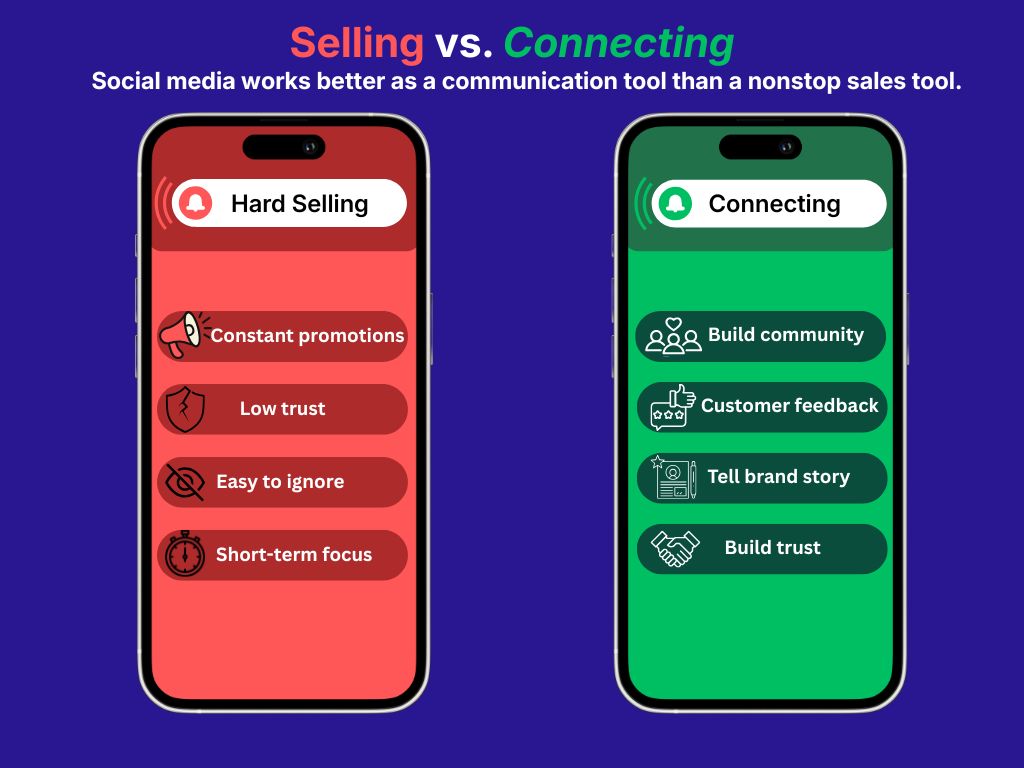
A major mistake brands make is assuming visibility automatically leads to conversions. Just because a company is posting often does not mean it is building trust. In fact, too much direct promotion can have the opposite effect. If every post sounds like an ad, followers start to tune the brand out.
Traditional advertising and social media do not work in the same way. A television commercial, radio ad, or billboard is expected to sell something directly. Social media is supposed to be more interactive. People expect conversation, personality, and value. They want content that gives them a reason to care before asking them to buy.
Professor Wolters is not claiming that companies should avoid selling on social media altogether; rather, he acknowledges that some direct sales can appropriately occur there. He argues that selling should not dominate a company’s presence. If the main goal of every post is to drive a purchase, the brand misses out on what social media actually does best, which is helping companies connect with people.
This idea also fits what marketing research has found for years. Nielsen reported that recommendations from people consumers know and other forms of earned media tend to be trusted more than traditional advertising, which helps explain why peer feedback, community conversation, and reviews matter so much online.
Why Community Matters More Than Constant Promotion
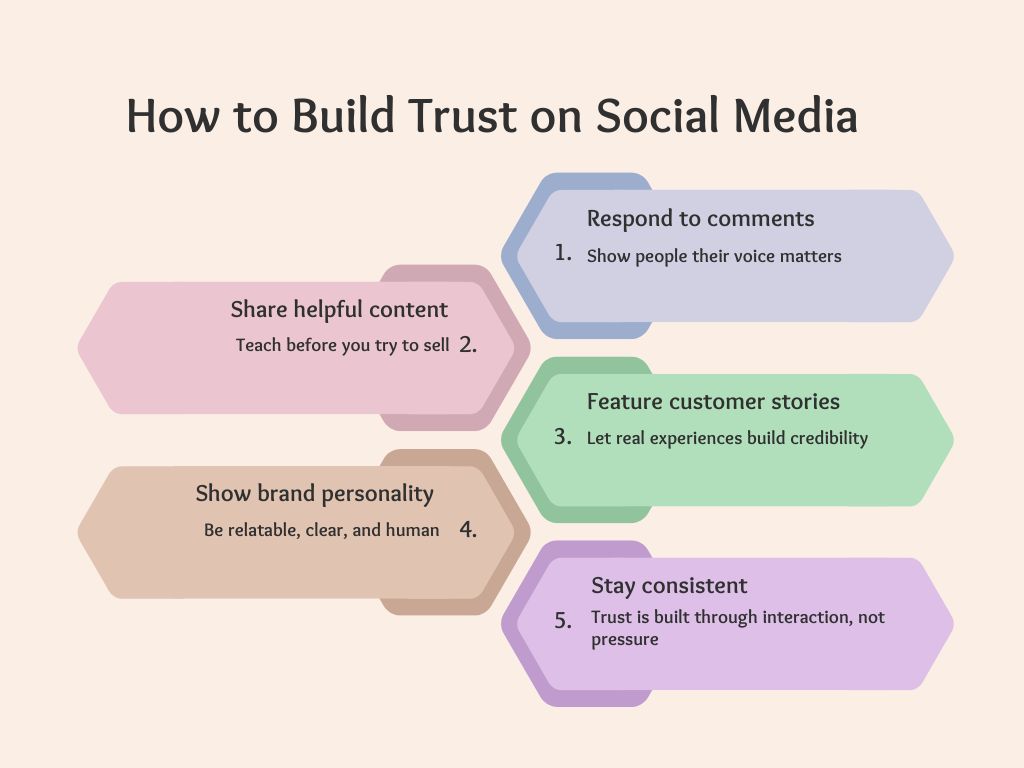
One of the strongest points in the video is that social media should help firms build community. That means using platforms to interact with followers rather than just speaking at them. Community can look simple on the surface. It might be replying to comments, asking followers questions, reposting customer content, or starting conversations around shared interests. Even small interactions can make a brand feel more human.
Community matters because it creates loyalty. When people feel acknowledged by a brand, they are more likely to trust it, remember it, and support it over time. A product may bring someone in once, but a sense of connection is more likely to bring them back. In crowded industries where many brands offer similar things, that emotional connection can be the difference between being forgettable and being chosen.
This idea goes beyond social media trends. Harvard Business Review has argued that strong brand communities can increase loyalty, lower marketing costs, and create new ideas for growth. That makes community building more than a soft marketing tactic. It becomes a real business advantage.
For younger audiences, especially, community often matters more than polished corporate messaging. People are more likely to engage with a brand that feels present, real, and responsive than a brand that posts polished graphics and asks for money.
Social Media Can Help Firms Learn from Customers
Another reason social media should not be treated only as a sales channel is that it can help companies learn directly from customers. Professor Wolters points out that businesses can use social media to develop products, improve offerings, and hear what customers actually want. Customers may mention product ideas, point out weaknesses, or suggest improvements the brand has not considered before.
Customer feedback is one of the most practical uses of social media. Instead of paying for expensive focus groups or waiting for sales numbers to reveal a problem, businesses can see customer reactions in real time. A comment section can reveal confusion. A review can expose a weak feature. A customer message might suggest an improvement the company had never considered.
This turns social media into a feedback loop. When companies pay attention, they can:
• spot customer frustrations early
• learn what people value most
• test reactions to new ideas
• improve products or services faster
• show customers that their input matters
Finally, listening itself builds trust. Customers notice when brands respond thoughtfully instead of ignoring feedback. A company that actually pays attention feels more credible than one that only broadcasts promotions.
Reviews, Social Proof, and Customer Stories Matter
Professor Wolters also stresses the value of reviews and peer feedback. He explains that people trust peer reviews more than advertisements, and that social media gives customers a way to tell their own story about a brand or product.
Social proof means people look to others when deciding what to believe or buy. If a company says its product is amazing, that might get some attention. But if customers say the same thing in comments, reviews, tagged posts, and testimonials, the message becomes much more believable.
Nielsen has repeatedly found that trust is especially strong for recommendations and earned media, which helps explain why customer voices can be more persuasive than formal ads.
In everyday life, this is easy to see. Many people check reviews before trying a restaurant, ordering clothes online, or buying skin care products. They want proof from real users. Social media makes that process even more visible because customer reactions are often public.
That means firms should spend less energy trying to control every message and more energy encouraging real customers to share experiences. When a business has satisfied customers speaking for it, that can do more than another polished sales post ever could.
Storytelling Builds a Stronger Brand
A company’s social media presence also helps shape its brand story. Professor Wolters notes that social platforms let firms explain what they are about, why they exist, and what they stand for. That kind of storytelling is not the same as selling. It informs, positions, and gives people a reason to remember the brand.
Storytelling matters because people connect with meaning more than with random product pushes. A company that only posts products starts to feel interchangeable. A company that shows its values, mission, people, process, and personality becomes easier to recognize and easier to trust.
This is also where authenticity matters. HubSpot’s consumer trends research says many consumers care strongly about content that feels authentic or relatable, with many also saying authenticity matters more than polished marketing videos. That reinforces the idea that brands do not always need to be perfectly polished on social media. They need to feel real.
For younger audiences, this is especially relevant. Many students and recent graduates are already skeptical of overly polished corporate messaging. They are more likely to respond to brands that feel honest, useful, and human.
Customer Service Is Part of the Social Media Strategy
An overlooked takeaway from the video is that social media can improve customer service. Professor Wolters explains that customers can reach out on platforms like Facebook, Twitter, or YouTube, and companies can respond in ways that improve the overall customer experience.
Customer service is a clear example of social media being a communication platform. A direct response to a frustrated customer does more than solve one problem. It also sends a message to everyone else watching. It shows whether the company is helpful, responsive, and accountable.
Sprout Social’s research on social media customer service shows that consumers expect brands to be responsive and helpful on social platforms. With many saying customer service should be a top priority for brands on social.
A strong social media strategy should take a more holistic approach, one that includes both content creation and direct interaction with users. How a company responds when people ask questions, raise concerns, or need support is a core part of its presence online. In many cases, that response can shape audience perception just as much as the original post
What Firms Should Do Instead of Hard Selling
If firms should not spend all their time directly selling on social media, what should they do instead?
They should focus on activities that create trust and relationship value first. Here is a recap of better uses of social media:
• Building community through comments, replies, and conversations
• Collecting feedback that can improve products and services
• Encouraging reviews and customer stories
• Telling the brand story in a memorable and honest way
• Providing customer service when questions or problems come up
• Showing thought leadership by sharing useful knowledge
• Expanding digital presence so the brand is visible in more spaces online
This does not mean selling disappears completely. Professor Wolters makes that clear, too. Social media can still support lead generation, product discovery, and eventual purchases. But those sales are more effective when they stem from trust, familiarity, and credibility rather than from constant pressure. In other words, brands can still sell on social media; they just do it in a smarter way.
Why This Matters Beyond Social Media
This topic matters for anyone interested in business, communication, or leadership. The bigger lesson is that people respond better to value than pressure.
Where ‘value’ applies in a lot of settings:
• Job interviews
• Networking
• Personal branding
• Sales
• Entrepreneurship
• Customer relations
In all of these areas, trust comes before commitment. People are more likely to say yes when they feel informed, respected, and understood. Social media just makes that process more visible because everything happens so publicly.
For students and future professionals, this is a useful reminder that good business communication is about being relevant, responsive, and worth listening to…not just being persuasive
Final Takeaway
At the end of the day, Professor Wolters’s main message is simple: social media is primarily a communication platform, not solely a selling one. Brands that treat it like a nonstop sales machine often turn people away. Brands that use it to build community, gather feedback, improve customer service, strengthen their digital footprint, and encourage customer stories are more likely to build real trust and brand equity.
That trust is what ultimately supports sales. People are more likely to buy from brands they recognize, believe in, and feel connected to. So, while some selling can happen on social media, the strongest strategy is not to push harder; it is to communicate better.