Best Practices for Influencers to Make Money with Affiliate Marketing
Sydney McTaggart
Senior Marketing Student at the University of Illinois interested in social media and digital branding.
Best Practices for Influencers to Make Money with Affiliate Marketing
What is Affiliate Marketing?
In the video “Best Practices for Influencers to Make Money with Affiliate Marketing,” Professor Wolter’s talks about some helpful tips for influencers who want to make money through affiliate marketing. Affiliate marketing is basically when influencers recommend products or services and earn a commission if someone buys through their link. It sounds simple, but the video explains that there is a smart way to do it, so it works better and does not turn your content into one big advertisement.
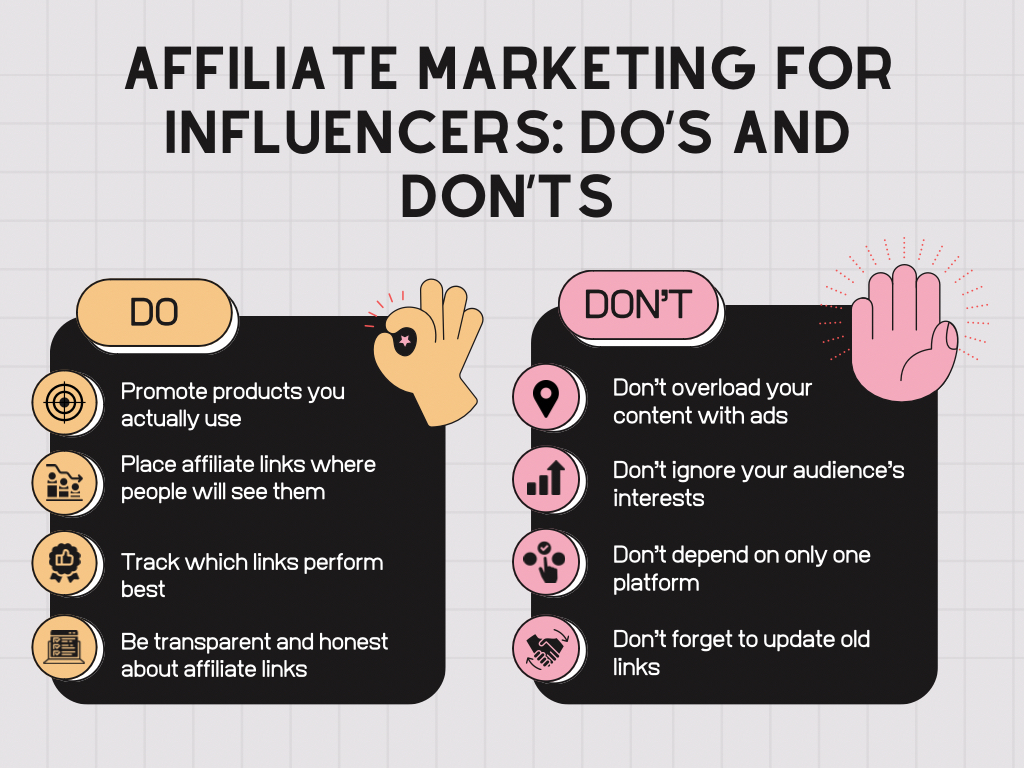
*See Infographic Above for some quick Do’s and Don’ts*
One thing I thought was interesting right away is how Professor Wolter’s explains that affiliate marketing is one of the biggest ways influencers make money “behind the scenes.” Many people assume influencers make money from brand sponsorships, but affiliate marketing can be a huge part of their income. The reason is because it allows creators to make money from the content they are already posting. Instead of only getting paid or one sponsored post, affiliate links can keep generating commissions over time whenever someone clicks on the link and makes a purchase. That is why so many creators use affiliate marketing as a long term strategy instead of just relying on one time brand deals.
Why Authenticity Matters for Influencers
One of the first things he talks about is how important it is to only promote products you believe in or use yourself. If you are recommending something just to make money, people can usually tell. But if you have used the product and cannot talk about your own experience with it, the recommendation feels much more genuine. That authenticity makes people trust you more and makes them more likely to click the link. This idea really stood out because people online are getting better at spotting when someone is just promoting something for money. If influencers constantly promote random products they do not actually use, their audience will start to lose trust in them. On the other hand, if creators talk about things they already use are not in their daily life, it feels more natural. It is like getting a recommendation from a friend instead of watching a commercial.
How Influencers Should Choose Products
Another big point is that influencers should not promote too many things all the time. If every post or video is just trying to sell something, it starts to appear as commercials instead of actual content. The video explains that it is better to be selective and only promote things that make sense for your content. For example, if someone runs a travel channel and talks about places they have visited, it makes sense to include links to hotels, tours, or booking sites. But randomly promoting something unrelated would feel weird and would not work well. Another part of this idea is that audiences follow influencers for a reason. Usually, it is because of a certain type of content they make, like travel, fitness, fashion, or technology. When affiliate products match that type of content, they feel more relevant and helpful. But if influencers start promoting things that do not fit their niche, it can make the content feel confusing or forced. The video gives an example of someone talking about a video game that they clearly do not even play, which makes the recommendation feel fake. That is why it is important for influencers to stay consistent with the kind of products they promote.
Professor Wolter’s also emphasizes how important it is to make good, valuable content first. Affiliate marketing should not just drop random links everywhere. The content itself should help or interest your audience, and then the product can fit naturally into that content. For example, if someone makes a video about the best day trips from London, they could include affiliate links for booking those tours in the description. That way, the link helps the viewer try the same experience. What he means by value driven content is that the audience should still get something useful out of the video or post even if they do not buy anything. For example, a travel video might show beautiful places to visit, helpful tips, and personal experiences. The affiliate links are an extra way for viewers to act if they want. When content is built around helping the audience instead of just selling something, affiliate marketing feels much more natural.
Another thing he mentions is having a clear call to action. If you want people to click a link, you must tell them where to find it. For example, saying something like, “If you want to book the hotel I mentioned, the link is in the description below.” Without that, people might not even realize there is a link they can use.
This also connects to how influencers communicate with their audience. Sometimes viewers need a simple reminder of what to do next. If someone just casually mentions a product but never explains where to find it, many viewers will not bother searching for it themselves. But when creators clearly say something like “check the link below,” it makes the process easier.
Where to Place Affiliate Links
The video also talks about where to place affiliate links. A lot of people make the mistake of putting them all the way at the bottom of a blog post or description where no one really sees them. Instead, links should be placed somewhere people are more likely to notice them, like near the top of a YouTube description or earlier in a blog post. On platforms like Instagram or TikTok, influencers might direct people to the link in their bio or a TikTok shop. This strategy is important because many people do not read an entire blog post or description. A lot of viewers only skim the top part before deciding whether to keep reading. By placing affiliate links where people will naturally see them first, creators increase the chances that someone will notice the link and click on it.
Why Tracking Performance Matters
Another important part of affiliate marketing is tracking how your links perform. Professor Wolter’s explains that influencers should pay attention to which affiliate programs work best. Some programs may pay higher commissions, while others might track customers for a longer period after they click the link. Looking at things like clicks and conversions can help influencers figure out which programs are worth focusing on.
Tracking performance also helps influencers make smarter decisions about their content strategy. If a certain type of product consistently performs well, creators might decide to make more content related to that topic. On the other hand, if a product gets a lot of clicks but very few purchases, that might mean the audience is not actually interested in it. Looking at analytics allows influencers to adjust their approach and focus on what works best.
He also mentions that influencers should check and update their links regularly. Sometimes products get replaced with new versions or links to stop working. If creators do not go back and update those links, people could end up clicking on something that does not work anymore. Professor Wolter’s even gives the example of technology products, like phones or cameras. If someone keeps linking to an older version of a product that is no longer sold, the link becomes useless. Regularly checking and updating links makes sure viewers always have access to the most current product.
Using Affiliate Tools and Platforms
Another helpful tip is using tools to make affiliate marketing easier, like link shorteners. Long affiliate links can look messy or even a little suspicious, so shortening them can make them look cleaner and more professional. There are also affiliate marketplaces that let creators join multiple affiliate programs in one place instead of signing up for each one separately.
The video also mentions affiliate marketplaces, which can make the process much easier for influencers. Instead of applying to dozens of individual affiliate programs, some platforms allow creators to access many programs from one place. This saves time and gives influencers more options when deciding what products or services to promote.
Another interesting point from the video is that not all affiliate programs work the same way. Some programs only count the sale if the customer buys immediately after clicking the link. Others use a “cookie window,” which tracks the customer for a certain time. That means if someone clicks the link and buys later, the influencer can still earn a commission. Understanding these differences can help creators choose programs that are more beneficial to them.
Why Diversifying Platforms Is Important
One of the biggest long term tips in the video is diversifying income and platforms. Influencers should not rely on just one affiliate program or one platform. Things online change quickly, and platforms can lose popularity or shut down. By using multiple affiliate programs and posting on different platforms, influencers can create more stable income streams. The internet changes quickly, and platforms that seem huge today might not always stay that way. The video mentions examples like MySpace or Vine that used to be very popular but eventually disappeared. Because of this, relying on only one platform can be risky. By building audiences on multiple platforms and using different affiliate programs, influencers can protect their income if something changes.
The video also suggests building an email list, which is something a lot of creators overlook. Social media platforms control who sees your content, but with an email list you can directly reach your audience whenever you want. That way, you are not completely dependent on social media algorithms.
Having an email list also gives creators more control over their audience. Social media algorithms decide who sees posts, but email allows creators to directly communicate with the people who signed up to hear from them. This makes it easier to share updates, promote content, or recommend products without relying entirely on social media platforms.
The Role of Transparency and Trust
Professor Wolter’s talks about the importance of being transparent about affiliate links. Influencers need to let people know when something is an affiliate link and that they may earn a commission. This is not just about following FTC rules, it also helps build trust with the audience. Being honest about affiliate links can help build stronger trust with an audience. When creators are open about the fact that they earn a commission, it shows transparency. Most viewers understand that influencers need to make money, but they appreciate it when creators are upfront about it instead of hiding it.
This video focused more on strategy and trust rather than quick money. A lot of people online talk about affiliate marketing like it is an easy way to get rich, but Professor Wolters explains that success really comes from building a loyal audience and creating enjoyable content first. Affiliate links are just one part of the bigger picture.
One thing this video also made me think about is how affiliate marketing connects to marketing in general. Many ideas Professor Wolter talked about are like things we learn in marketing classes, like building trust with customers and creating value before trying to sell something. If influencers focus only on selling products, people will eventually stop paying attention. But when creators focus on providing helpful information, entertainment, or experiences first, their audience becomes more loyal. At that point, recommending a product does not feel like advertising anymore, it just feels like a suggestion from someone you trust. That is why affiliate marketing works best when it is integrated naturally into content instead of feeling a separate sales pitch.
The biggest takeaway from the video is that affiliate marketing works best when it feels natural and honest. If influencers focus on creating useful content, recommending products that fit their niche, and being transparent with their audience, affiliate marketing can become an effective way to earn money online. It also shows that successful affiliate marketing takes planning and consistency. From choosing the right products to placing links strategically and tracking performance, every step plays a role in how well it works. When influencers focus on building trust and helping their audience, affiliate marketing becomes less about selling and more about sharing useful recommendations.
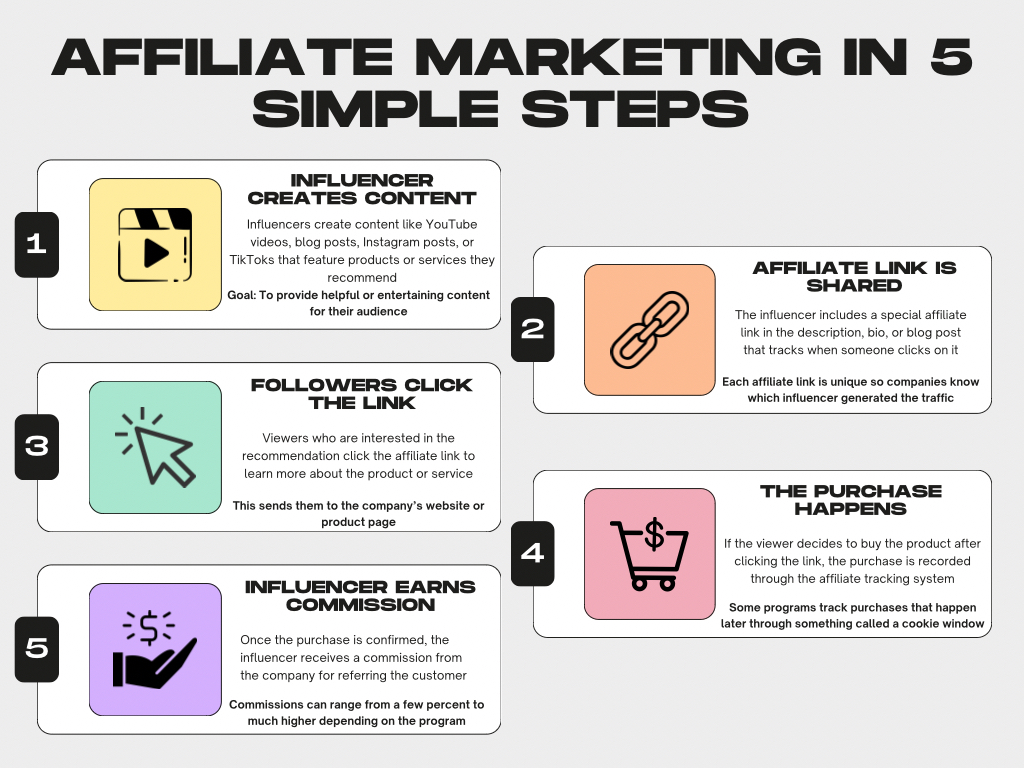
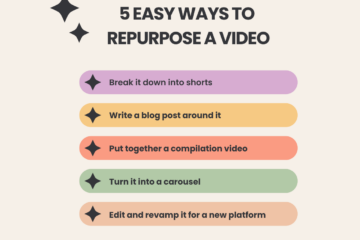
*View the above Infographic for 5 simple steps to summarize Affiliate Marketing*